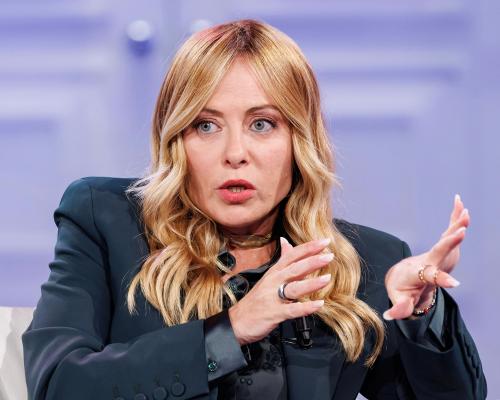
The Italian government has been accused of ramping up(加大;加剧) divisive(分裂性的;引起分歧的) rhetoric to try to court far-right voters(拉拢极右翼选民) ahead of next year’s general election after it passed a decree(法令;政令) aimed at capping(限制;设上限) the number of newly arrived migrants in classrooms and banning the burqa and niqab(布卡与尼卡布:伊斯兰女性服饰) in schools.
意大利政府被指在明年大选前加大分裂性言论以拉拢极右翼选民,此前政府通过了一项法令,旨在限制课堂上新抵达移民的人数,并禁止在学校穿戴布卡和尼卡布。
The prime minister, Giorgia Meloni, who leads the far-right Brothers of Italy party, said her government had approved what she called “commonsense measures that do not divide but genuinely help to integrate”.(领导极右翼政党意大利兄弟党的总理焦尔吉娅·梅洛尼表示,她的政府已批准了她所称的“不制造分裂、真正有助于融合的常识性措施”。)
领导极右翼政党意大利兄弟党的总理焦尔吉娅·梅洛尼表示,她的政府已批准了她所称的“不制造分裂、真正有助于融合的常识性措施”。
Writing on social media, she said the measures included: “A limit of 30% in classrooms for students who do not adequately know Italian, plus tools to learn our language and a halt to burqas and niqabs in school.”(她在社交媒体上写道,这些措施包括:“对意大利语不够熟练的学生,课堂比例限制在30%以内,并提供学习我们语言的工具,同时禁止在学校穿戴布卡和尼卡布。”)
她在社交媒体上写道,这些措施包括:“对意大利语不够熟练的学生,课堂比例限制在30%以内,并提供学习我们语言的工具,同时禁止在学校穿戴布卡和尼卡布。”