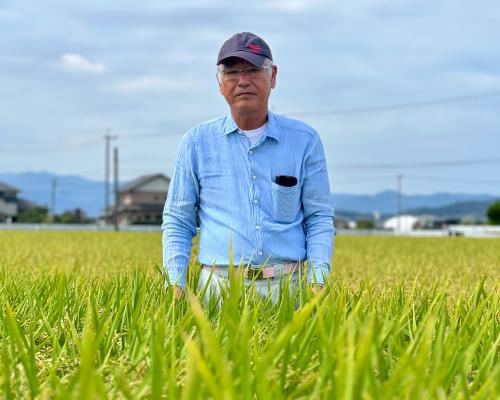
When schoolchildren in Shiroishi were enlisted(被招募、被组织) to plant rice seedlings in June, Shinto priests(神道教祭司) blessed the land and asked the deities for a bountiful(丰盛的,大量的) crop. Judging by the fields behind farmer Haruki Kawasaki, their prayers have been answered.
今年六月,白石市的小学生被组织起来插秧,神道教祭司为土地祈福,祈求神明赐予丰收。从农民川崎春树身后的稻田来看,他们的祈祷得到了回应。
The 63-year-old is preparing to harvest this year’s crop of hinatamaru, a variety of rice whose plump grains have thrived despite exposure to another hot and dry summer, conditions that typically punish rice yields.(这位63岁的农民正准备收割今年的“日向丸”水稻。尽管又经历了一个炎热干燥的夏天——这种天气通常会严重损害水稻产量——但这一品种的稻谷依然颗粒饱满,长势良好。)
这位63岁的农民正准备收割今年的“日向丸”水稻。尽管又经历了一个炎热干燥的夏天——这种天气通常会严重损害水稻产量——但这一品种的稻谷依然颗粒饱满,长势良好。
Hinatamaru is one of growing number of heat-resistant rice varieties that are giving fresh hope to farmers across Japan that they can overcome a climate emergency that is threatening the country’s staple crop.(“日向丸”是越来越多耐热水稻品种之一,这些品种给日本各地农民带来了新的希望,让他们有望战胜正在威胁该国主粮作物的气候紧急状况。)
“日向丸”是越来越多耐热水稻品种之一,这些品种给日本各地农民带来了新的希望,让他们有望战胜正在威胁该国主粮作物的气候紧急状况。
Embracing heat-loving crops
拥抱喜热作物