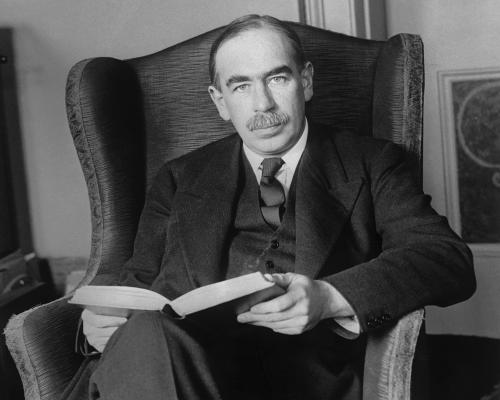
The sound of guns from the advancing German armies could be heard clearly by John Maynard Keynes as his train trundled(缓慢行驶) across northern France in the spring of 1918. The evidence of the struggle on the western front(一战西线战场) was everywhere but Keynes, then a Treasury official(财政部官员), was not heading to Paris on war business(为战事出差); he was off to buy some art.
1918年春天,约翰·梅纳德·凯恩斯乘坐的火车缓缓驶过法国北部,德军推进的枪炮声清晰可闻。西线战事的痕迹随处可见,但当时身为财政部官员的凯恩斯并不是为战事前往巴黎,他是去买艺术品的。
Keynes made the risky trip to attend an auction(拍卖会) of the studio of Edgar Degas(法国印象派画家德加), who had died the previous year. The man who would become the foremost(最重要的) economist of the 20th century returned to London with some impressionist treasures for the National Gallery(英国国家美术馆), having successfully petitioned the chancellor of the exchequer(向财政大臣请款) to spend £20,000 at the sale.
凯恩斯冒险前往,参加埃德加·德加工作室的拍卖会——德加已于前一年去世。这位后来成为20世纪最重要经济学家的人,成功说服财政大臣拨款2万英镑参与竞拍,为英国国家美术馆带回了一批印象派珍品。
This story reveals much about Keynes. His skill in lobbying(游说) officialdom(官场、官僚) for funds at a time when the country was involved in a costly war. His love of art, which culminated in(最终促成) him being instrumental in(起关键作用) setting up the Arts Council(英国艺术委员会). His conviction that economics mattered less than the good things in life.
这个故事很能说明凯恩斯其人。他善于在国家深陷昂贵战争之际游说官场争取资金;他热爱艺术,最终推动创建了英国艺术委员会;他坚信,经济学远不如生活中的美好事物重要。