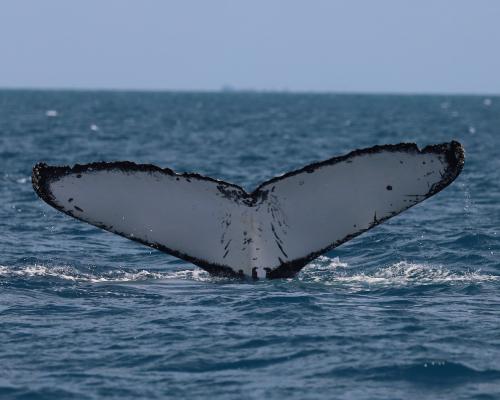
Gruesome images of adult and juvenile(幼年的) humpback whales along Australia’s east coast with slash(割裂伤) and gouge(凿伤) injuries from boat and propeller strikes highlight what experts say is a growing problem(凸显出专家所说的日益严重的问题), as the population boom(激增)s 60 years after the ban on whaling.
澳大利亚东海岸成年和幼年座头鲸身上布满船只和螺旋桨撞击造成的割裂和凿伤,这些触目惊心的照片凸显出专家所说的一个日益严重的问题——在禁止捕鲸60年后,座头鲸数量正在激增。
Missing tail parts, deep red laceration(撕裂伤)s and shocking injuries to the spine of a whale calf(幼鲸) can be clearly seen on the images, gathered by WWF Australia and shared with the Guardian(由世界自然基金会澳大利亚分会收集并提供给《卫报》).
这些由世界自然基金会澳大利亚分会收集并提供给《卫报》的照片中,可以清楚地看到缺失的尾鳍、深红色的撕裂伤,以及一头幼鲸脊柱上触目惊心的伤口。
One image of fresh and broad cuts on the back of a calf was taken last month in Hervey Bay(赫维湾,澳大利亚昆士兰州的观鲸胜地) in Queensland, where many mothers choose to bring their calves for rest and shelter(庇护、躲避) on the long migration(迁徙) down to Antarctica(南极洲,座头鲸的夏季觅食地).
其中一张照片拍摄于上个月昆士兰州赫维湾,显示一头幼鲸背部有新鲜的宽大伤口。许多母鲸在长途迁徙前往南极洲的途中,会选择带幼鲸到赫维湾休息和躲避风浪。
Conservation success story
保护的成功故事