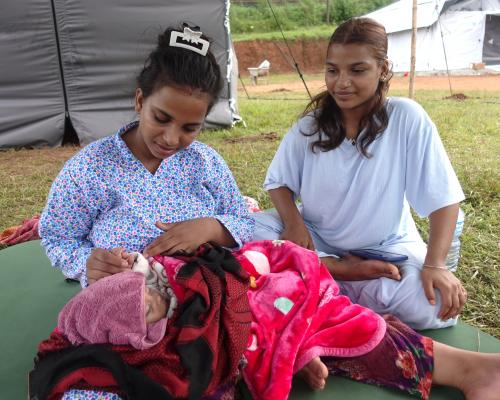
For three days, Pooja Pariyal waited on the roof of Trishuli hospital with her three-month-old daughter, Ridhika. On the ground below and around the building, most of her town had been destroyed and churned(搅动,翻腾) into a sea of mud(一片泥海) in the catastrophic(灾难性的) flash floods that surged(汹涌,激增) through the Himayalan border region of Nepal and Tibet in August.
三天来,普贾·帕里亚尔带着三个月大的女儿里迪卡一直待在特里苏里医院的屋顶上。在建筑物下方和周围的地面上,她所在的小镇大部分已被摧毁,在8月席卷尼泊尔和西藏喜马拉雅边境地区的灾难性山洪中,整个镇子变成了一片泥海。
“Those three days were living hell(人间地狱) for me, with no food, no working toilet and no one to help with the baby,” she says. “I had nothing to clean my baby’s soiled(弄脏的) clothes. My milk supply had reduced because I was hungry and this poor little thing would cry her lungs out(哭得撕心裂肺).
“那三天对我来说就是人间地狱,没有食物,没有能用的厕所,也没人帮忙照顾孩子,”她说。“我没有东西可以清洗宝宝弄脏的衣服。因为饥饿,我的奶水减少了,这个可怜的小家伙哭得撕心裂肺。”
“I am so sorry you had to go through(经历,遭受) all of this,” she adds, breaking down in tears(泪流满面,崩溃大哭) looking down at her baby.
“很抱歉让你经历了这一切,”她补充道,低头看着宝宝,泪流满面。