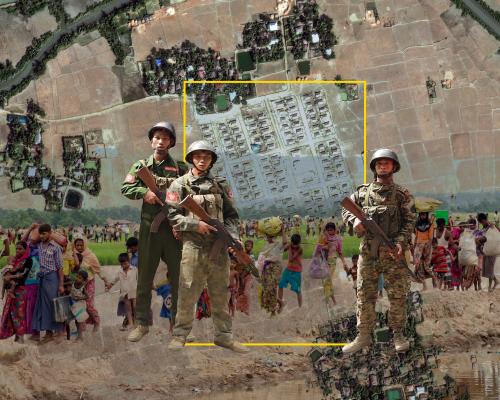
There are at least 10 camps like the one on the paddy fields at Hnget Thay, built after the insurgent Arakan Army (AA) took control of most of northern Rakhine state in 2024.(至少有10个像Hnget Thay稻田上那样的营地,它们是在叛军若开军于2024年控制若开邦北部大部分地区后建起来的。) These are where many Rohingya people in the state now have to live. Others hide in the mountains, or flee abroad(逃往国外) to the refugee camps of Bangladesh or make deadly boat journeys to Malaysia.
至少有10个像Hnget Thay稻田上那样的营地,它们是在叛军若开军(AA)于2024年控制若开邦北部大部分地区后建起来的。如今,该邦许多罗兴亚人只能住在这些营地里。其他人则躲进山里,或逃往孟加拉国的难民营,或踏上前往马来西亚的致命海路。
The arrival of more than 155,000 Rohingya in Bangladesh since 2024, which amounts to 25% of the 600,000 estimated to still be in Myanmar, has raised concerns about the very survival of a people who now mostly live abroad as refugees.(自2024年以来,超过15.5万罗兴亚人抵达孟加拉国,这相当于估计仍留在缅甸的60万罗兴亚人的25%,引发了人们对这个如今大多以难民身份生活在国外的民族能否存续的担忧。)
自2024年以来,超过15.5万罗兴亚人抵达孟加拉国,这相当于估计仍留在缅甸的60万罗兴亚人的25%,引发了人们对这个如今大多以难民身份生活在国外的民族能否存续的担忧。
The Rohingya are a mostly Muslim minority group from western Myanmar who have faced decades of persecution(迫害) and clashes with Buddhist nationalists(缅甸佛教民族主义者). The word translates as from Rohang – the district that is now Rakhine State. Speaking a language similar to the Bengali dialect of Chattogram (formerly Chittagong) in Bangladesh, they are reviled by many in Myanmar as a foreign people and are denied citizenship by the regime.(他们说一种与孟加拉国吉大港(旧称Chattogram)孟加拉语方言相近的语言,却被缅甸许多人斥为外来民族,并被政权剥夺公民身份。)
罗兴亚人是来自缅甸西部、大多信仰伊斯兰教的少数民族,数十年来一直遭受迫害,并与佛教民族主义者发生冲突。“罗兴亚”一词意为“来自罗杭”——即如今的若开邦。他们说一种与孟加拉国吉大港(旧称Chattogram)孟加拉语方言相近的语言,却被缅甸许多人斥为外来民族,并被政权剥夺公民身份。
Methodology
方法论