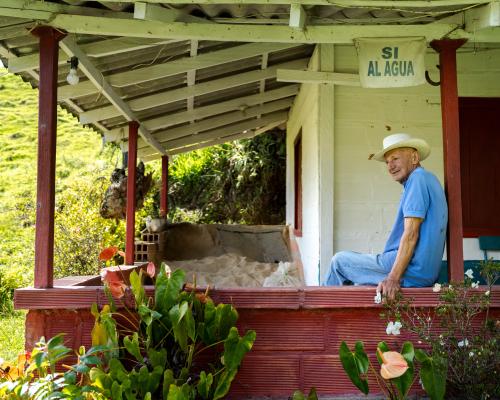
In the rural hamlet(小村庄) of Palo Cabildo in Colombia’s western Andes, 87-year-old farmer Porfirio Garcés tends to(照料,照管) his anthuriums(红掌(植物)) in the garden of his small house. He talks with passion about his vinyl record collection, which ranges from classical to pop music, but his main interest now lies elsewhere: his homeland, to which he feels a deep connection – and his desire to protect it.(他热情地谈论自己的黑胶唱片收藏,从古典到流行都有,但他现在的主要兴趣在别处:他的家乡,他对其怀有深厚感情——以及保护它的愿望。)
在哥伦比亚西部安第斯山脉的帕洛卡比尔多小村庄,87岁的农民波菲里奥·加尔塞斯正在自家小花园里照料红掌。他热情地谈起自己的黑胶唱片收藏,从古典到流行应有尽有,但他现在的主要兴趣却在别处:他的家乡,他对其怀有深厚感情——以及保护它的愿望。
Numerous water sources originate in the area, supplying not only Jericó, where Garcés lives, but also several neighbouring towns in the Antioquia region.(该地区有众多水源,不仅为加尔塞斯居住的赫里科供水,还供给安蒂奥基亚地区的几个邻近城镇。) A sign with a clear message hangs on the main porch(门廊) of his property: “Yes to water.”
该地区有众多水源,不仅为加尔塞斯居住的赫里科供水,还供给安蒂奥基亚地区的几个邻近城镇。他住所的门廊上挂着一块标语牌,上面写着明确的信息:“要水。”
“We don’t want to wake to the roar of machinery drilling into and destroying our land, destroying the poetry of the landscape,” says Garcés.(“我们不想一觉醒来听到机器轰鸣,钻入并摧毁我们的土地,摧毁风景中的诗意,”加尔塞斯说。) “We must defend our water sources. Without water, we will die of thirst.”
“我们不想一觉醒来听到机器轰鸣,钻入并摧毁我们的土地,摧毁风景中的诗意,”加尔塞斯说。“我们必须保卫水源。没有水,我们会渴死。”