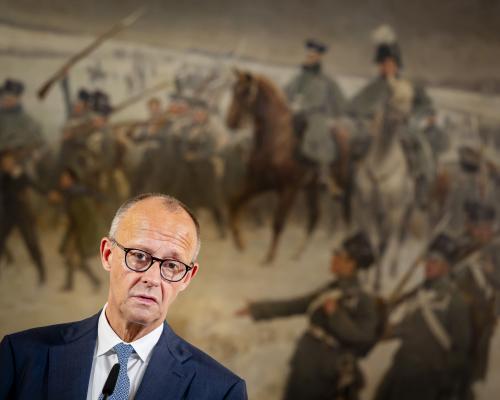
When the German chancellor(总理(德国等)), Friedrich Merz, visited the White House earlier this year for a high-stakes(事关重大的) meeting with Donald Trump, he invited a Washington-based German researcher little known outside expert circles(专家圈外鲜为人知) to a private dinner.
今年早些时候,德国总理弗里德里希·默茨前往白宫,与唐纳德·特朗普举行一场事关重大的会晤。其间,他邀请了一位常驻华盛顿、在专家圈之外鲜为人知的德国研究者共进私人晚餐。
Liana Fix had caught his eye(引起他的注意) with a forthright(直言不讳的) essay in the journal Foreign Affairs warning of the perils of Germany becoming “Europe’s next hegemon(霸主、霸权国)”, whose military dominance may come to scare its neighbours and divide Europe once again. That concern might seem far-fetched after three decades since the fall of the Berlin Wall, during which a peace-loving reunited Germany let its armed forces wither and rust, prided itself on being a “civil power” and preached a gospel of military restraint.(柏林墙倒塌已三十年,其间爱好和平的德国任由军力萎缩,以文明国家自居并宣扬军事克制,因此这种担忧似乎显得不切实际。)
莉安娜·菲克斯在《外交事务》杂志上发表的一篇直言不讳的文章引起了默茨的注意。文章警告说,德国若成为“欧洲的下一个霸主”,其军事主导地位可能令邻国恐惧,并再次分裂欧洲。柏林墙倒塌已过去三十年,在这三十年间,一个爱好和平的重新统一的德国任由其武装力量萎缩生锈,以“文明国家”自居,并宣扬军事克制的信条。因此,上述担忧或许显得杞人忧天。
Yet the combination of a sudden surge in German rearmament, growing doubts over the United States’ willingness to remain the guarantor of European security through Nato, and the rise of the far-right nationalist Alternative für Deutschland (AfD) party, currently leading in opinion polls, has reignited old anxieties among Berlin’s neighbours, especially Poland and France.(然而,德国重整军备骤增、外界对美国是否愿继续通过北约担保欧洲安全的疑虑,以及极右翼政党德国选择党的崛起,三者叠加,重新点燃了柏林邻国尤其是波兰和法国的旧忧。)
然而,德国重整军备的骤然加速、外界对美国是否愿意继续通过北约充当欧洲安全担保人的疑虑日增,以及极右翼民族主义政党德国选择党(AfD)的崛起——该党目前在民调中领先——这三者叠加,重新点燃了柏林邻国、尤其是波兰和法国的旧日忧虑。