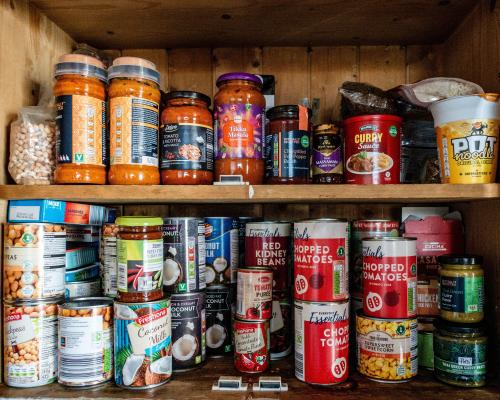
There is no national food stockpile(储备;囤积) and there hasn’t been since it was wound up in the 1990s. It feels like a metaphor for the delusion(错觉;妄想)s of that era: nothing bad can possibly happen again; no two countries with a McDonald’s have gone to war with each other (according to the journalist Thomas L Friedman, also in the 90s). Now, we all have a McDonald’s and wars regularly disrupt food supplies. The problem with metaphors is you can’t eat them – not even satisfying ones.(隐喻的问题在于,它不能吃——哪怕是令人满足的隐喻也不行。)
英国没有国家粮食储备,自上世纪90年代储备被撤销以来就一直没有。这像是一个隐喻,象征着那个时代的种种幻觉:坏事不可能再发生;两个都有麦当劳的国家不会开战(记者托马斯·L·弗里德曼的说法,同样出自90年代)。如今,我们人人都有麦当劳,而战争却频频扰乱粮食供应。隐喻的问题在于,它不能吃——哪怕是令人满足的隐喻也不行。
For people who remember the second world war, or feel as if they do, there is always enough muscle memory(肌肉记忆) to do topical(应景的;时事的) household stockpiling. My mum kept a trunk of food that was mainly filled with condensed milk(炼乳) in case of a nuclear war, all the way through the 80s. When the Berlin Wall came down, we should have had a ceremonial toffee-sauce-making event where we ate it all, but we didn’t; in 1990, she was stockpiling again, to mark the Gulf war.
对于记得二战、或自以为记得二战的人来说,总有一种肌肉记忆,足以支撑他们随时进行应景的家庭囤货。我妈妈一直备着一箱食物,里面主要是炼乳,以防核战争,整个80年代都是如此。柏林墙倒塌时,我们本该办一场仪式性的"熬太妃糖酱"活动,把那箱炼乳全吃掉,但我们没有;1990年,她又开始囤货了,为的是纪念海湾战争。
The spectre(幽灵;挥之不去的恐惧) of Y2K saw a large amount of bottled water enter the house, but by then I’d left home. When 9/11 happened, the water had gone off, but it was still fine for washing, apparently, so all she needed was a load of new water – and all that remained for the wider family was to call her mad and occasionally steal her anchovies.(9·11发生时,那些水已经变质,但据说洗东西还行,所以她只需要再买一大批新水——而全家人能做的,就是骂她疯了,偶尔再偷点她的凤尾鱼。)
千年虫的幽灵让家里进了大量瓶装水,但那时我已经离家了。9·11发生时,那些水已经变质,但据说洗东西还行,所以她只需要再买一大批新水——而全家人能做的,就是骂她疯了,偶尔再偷点她的凤尾鱼。