It was 4pm and 90F (32C) when Carlos Vargas Moreno and other farm workers set out to weed(除草) a watermelon field in Goldsboro, North Carolina, on 19 July 2022.
2022年7月19日下午4点,气温90华氏度(32摄氏度),卡洛斯·巴尔加斯·莫雷诺和其他农场工人出发去北卡罗来纳州戈兹伯勒的一块西瓜地里除草。
The work day had begun at 7am and included two 15-minute breaks and a one-hour lunch eaten outdoors. The heat index(热指数) – what the temperature feels like to the human body when relative humidity is combined with the air temperature – was 98.3F. It was the kind of day that a heat safety app created by the Occupational Safety and Health Administration (Osha) and the National Institute for Occupational Safety and Health (Niosh) defined as “hazardous(危险的)” for outdoor workers.
这一天的工作从早上7点开始,中间有两次15分钟的休息和一顿在户外吃的一小时午餐。当时热指数——即相对湿度与气温结合后人体所感受到的温度——为98.3华氏度。按照美国职业安全与健康管理局(Osha)和国家职业安全与健康研究所(Niosh)开发的一款高温安全应用程序的定义,这样的天气对户外工作者而言属于“危险”级别。
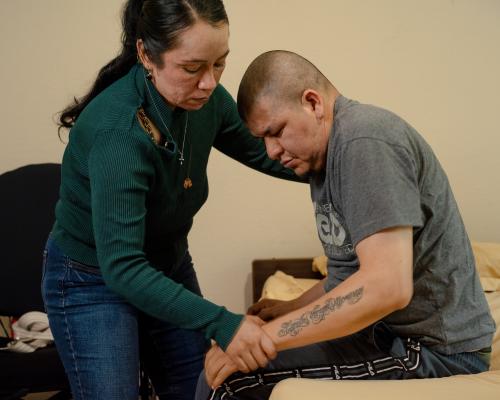
According to court documents, government records and testimony(证词) from workers present that day, Vargas Moreno paused to get a drink of water just before 6pm. A few seconds later, he stagger(踉跄)ed and collapsed. He was later diagnosed with heatstroke(热射病).
根据法庭文件、政府记录以及当天在场工人的证词,巴尔加斯·莫雷诺在快到下午6点时停下来喝了口水。几秒钟后,他踉跄了一下,倒了下去。他随后被诊断为热射病。
‘Had to put up with the work’
“只能忍着干活”
The standard is no standard
标准就是没有标准
‘There hasn’t been much accountability’
“问责几乎不存在”