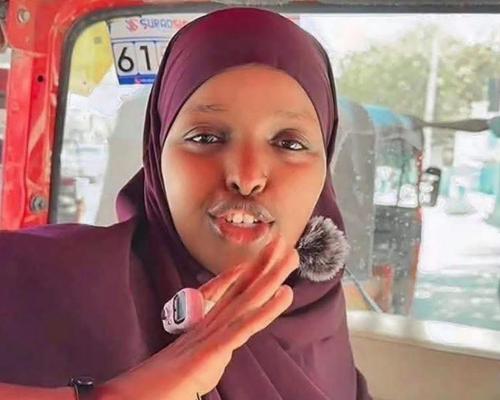
‘Why don’t you just drive your tuk-tuk and do your work?” the judge asked me after videos from my social media accounts were shown during my court hearing.(“你为什么不干脆开你的嘟嘟车、干你的活?”法官在法庭听证会上播放了我社交媒体账号的视频后这样问我。) I had spoken on TikTok and Facebook about issues in Somalia that concerned me: forced eviction(驱逐,强制搬迁)s in the capital, Mogadishu, high fuel prices and nepotism(裙带关系,任人唯亲) in government.
“你为什么不干脆开你的嘟嘟车、干你的活?”法官在法庭听证会上播放了我社交媒体账号的视频后这样问我。我曾在TikTok和Facebook上谈论索马里令我关切的问题:首都摩加迪沙的强制拆迁、高昂的燃油价格以及政府中的裙带关系。
I had described how, when I applied for work in hospitals and government departments, I was told on three occasions that I’d have to give a sexual favour in return.(我曾描述过,当我向医院和政府部门求职时,有三次被告知必须提供性服务作为交换。)
我曾描述过,当我向医院和政府部门求职时,有三次被告知必须提供性服务作为交换。
In Somalia, women have no right to be part of society or to express themselves. They are not respected. Those who do dare to speak out(公开表达意见,大胆发声) are subjected to violence – or even disappeared.
在索马里,女性无权参与社会,也无权表达自我。她们不受尊重。敢于发声的人会遭到暴力——甚至被失踪。