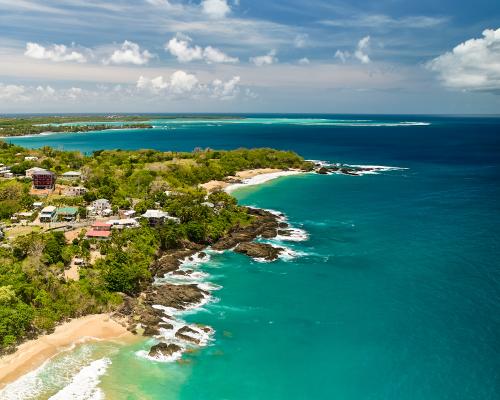
Visitors to Rocky Point in south-west Tobago are drawn to its sandy beach, fringed(边缘环绕) by coral reefs and dark rock formations and carpeted(铺满) with the fruit-bearing trees found on Caribbean coastlines – almonds, sea grapes, coconuts, and the poisonous manchineel(毒番石榴). The beach is part of Back Bay, a 500-metre swathe(长条地带) of land, and trekking through its undulating(起伏的) terrain, thickly covered in bush and shrubs, feels akin to(类似于) walking through a rainforest.
多巴哥西南部的落石角(Rocky Point)吸引游客的,是它那细沙海滩——珊瑚礁和深色岩层环绕四周,加勒比海岸常见的果树铺满地面:杏仁树、海葡萄、椰子树,还有有毒的毒番石榴。这片海滩属于后湾(Back Bay),一片绵延500米的土地。穿行于起伏不平、灌木丛生的地形中,感觉就像在雨林里徒步。
But this still relatively unspoiled location is at the centre of a struggle between two opposing interests – those who see large-scale development as the most profitable path and those who believe smaller, incremental developments owned by the community would be best.(但这片仍相对未受破坏的地方,正处在一场两种对立利益之间的角力中心——一方认为大规模开发是最赚钱的路径,另一方则认为由社区拥有的、小规模渐进式开发才是最佳选择。)
但这片仍相对未受破坏的地方,正处在一场两种对立利益之间的角力中心——一方认为大规模开发是最赚钱的路径,另一方则认为由社区拥有的、小规模渐进式开发才是最佳选择。
As elsewhere in the Caribbean, the need for economic growth has led to growing interest in tourism development. Rene Seepersadsingh, the first vice-president of the Tobago Hotel and Tourism Association, says: “Tobago is very focused on attracting private partnership investment(私人合作投资) because our tourism product is now in that evolution(演变、进化) stage, where we’re looking to upgrade(升级) the offering that we have.
与加勒比地区其他地方一样,经济增长的需求引发了对旅游开发日益浓厚的兴趣。多巴哥酒店与旅游协会第一副主席雷内·西珀萨德辛格表示:“多巴哥非常注重吸引私人合作投资,因为我们的旅游产品正处在进化阶段,我们正寻求升级现有的产品。”