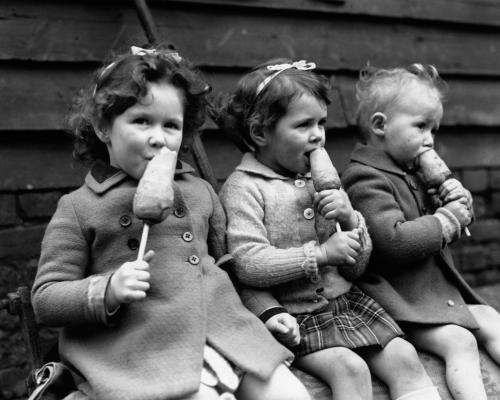
They were born into a Britain still recovering from the hardships of war. Though the air-raid sirens(空袭警报) had fallen silent, many everyday foods remained rationed(实行配给), including sugar. Adults were restricted to about 3 tablespoons(汤匙) (40g) a day to stretch between(省着分摊到) cups of tea, baking and desserts; children were limited to less than a tablespoon. Babies and very young children were expected to have little or no added sugar(添加糖).
他们出生在一个仍在从战争苦难中恢复的英国。虽然空袭警报已经沉寂,但包括糖在内的许多日常食品仍实行配给。成年人每天被限制在约3汤匙(40克)以内,要省着分摊到茶、烘焙和甜点中;儿童则被限制在不到1汤匙。婴儿和幼儿则被要求几乎不摄入添加糖。
Then, in 1953, the brakes came off(限制放开). Separate restrictions on sweets and chocolate were lifted(解除) in February, followed by sugar in September. By the second half of 1954, average sugar consumption had almost doubled(翻了一番).
然后,到了1953年,限制放开了。糖果和巧克力的单独限制在2月解除,糖的限制随后在9月解除。到1954年下半年,平均糖消费量几乎翻了一番。
The lifting of postwar sugar rationing inadvertently created a natural experiment, whose consequences scientists are only beginning to unpick.(战后糖配给制的解除无意中创造了一场自然实验,其后果科学家才刚刚开始厘清。) A flurry of recent studies suggests that spending the first 1,000 days of life under sugar rationing may have left traces on(留下痕迹) people’s health more than seven decades later.
战后糖配给制的解除无意中创造了一场自然实验,其后果科学家才刚刚开始厘清。近期一系列研究表明,在生命最初1000天里经历糖配给,可能在七十多年后仍在人们的健康上留下痕迹。