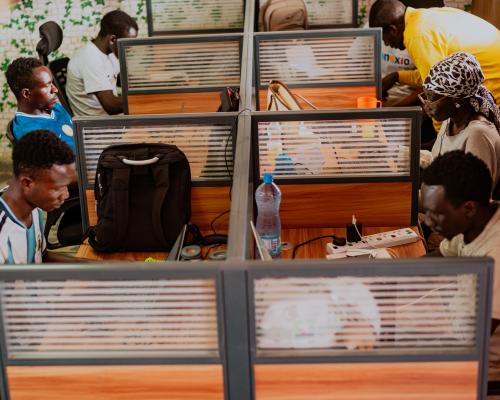
In a portable building(活动板房) in Kakuma, a refugee camp(难民营) near Kenya’s northern border with South Sudan, Grace used ChatGPT to research translations of Christian hymn(赞美诗)s in languages she doesn’t speak. She didn’t know the client, the purpose of her work or whether she would be paid, but as a refugee unable to legally work in Kenya, she needed any opportunity she could get(任何能抓住的机会).
在肯尼亚北部与南苏丹边境附近的卡库马难民营,一间活动板房里,格蕾丝用ChatGPT研究她不会说的语言的基督教赞美诗翻译。她不知道客户是谁、工作的目的是什么,也不知道能否拿到报酬,但作为一名无法在肯尼亚合法工作的难民,她需要抓住任何机会。
Grace, who requested anonymity(匿名) due to a nondisclosure agreement(保密协议), prompted ChatGPT to translate the hymn’s English text into the assigned east Asian language. She then used the translation to search for existing versions and find information about its translator, author and Christian denomination(教派). She fed those details to AOP Connect, a crowdsourced(众包的) research platform owned by British AI enterprise software company RWS.
格蕾丝因签署了保密协议而要求匿名。她让ChatGPT把赞美诗的英文文本翻译成指定的东亚语言,然后用译文搜索现有版本,查找译者、作者和基督教教派的信息。她把这些细节输入AOP Connect——英国AI企业软件公司RWS旗下的众包研究平台。
If RWS deem(认为)s her work high quality based on six listed criteria, it could award her up to $500 as a “discretionary(酌情决定的) reward”, according to RWS researcher documents and manuals reviewed by the Guardian. But refugees aren’t guaranteed wage(工资)s, and most earn significantly less than the maximum without being told why(无人告知原因), said Asha Luka Abdallah, a mentor at the Solidarity Initiative for Refugees (SIR), an organization that trains refugees to work in the tech outsourcing industry.
根据《卫报》审阅的RWS研究员文件和手册,如果RWS根据六项列出的标准认定她的工作质量高,她最多可获得500美元的“酌情奖励”。但难民们没有保底工资,大多数人拿到的远低于最高额,却无人告知原因,难民团结倡议(SIR)的导师阿莎·卢卡·阿卜杜拉说。SIR是一家培训难民从事科技外包工作的组织。
The ‘invisible architects’
“隐形建筑师”
Life online in Kakuma
卡库马的线上生活
Dwindling opportunities
机会日渐稀少
Rewards, not wages
奖励,而非工资
Building better protections
建立更好的保护