Even before María del Carmen Abascal died on Wednesday night, a mere fortnight after her eviction from the Madrid flat where she had lived for most of her life, the frail 87-year-old woman had become the enduring face of Spain’s housing crisis.(甚至早在玛丽亚·德尔·卡门·阿巴斯卡尔周三晚去世之前——距她被逐出那套住了大半辈子的马德里公寓仅两周——这位虚弱的87岁老人就已经成为西班牙住房危机挥之不去的面孔。)
甚至早在玛丽亚·德尔·卡门·阿巴斯卡尔周三晚去世之前——距她被逐出那套住了大半辈子的马德里公寓仅两周——这位虚弱的87岁老人就已经成为西班牙住房危机挥之不去的面孔。
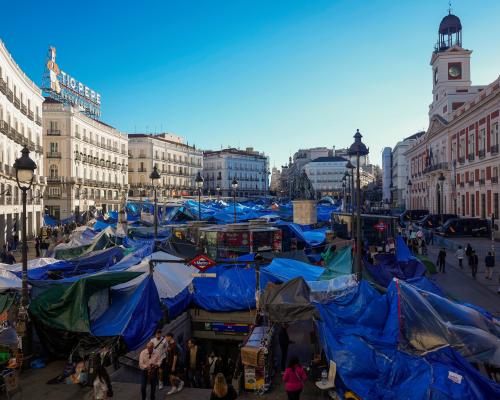
Her plight – and the wider issue it embodied – had led to street demonstrations, the creation of a protest camp in the middle of the Spanish capital, and spurred the socialist-led government to propose emergency measures to facilitate and protect access to housing.(她的困境——以及它所代表的更广泛问题——引发了街头示威,在西班牙首都中心建起了抗议营地,并促使社会党领导的政府提出紧急措施,以便利和保护人们获得住房。) When rightwing and far-right parties voted down those measures in congress last week, the prime minister, Pedro Sánchez, responded by announcing a snap(仓促的,突然的) general election for the end of November.
她的困境——以及它所代表的更广泛问题——引发了街头示威,在西班牙首都中心建起了抗议营地,并促使社会党领导的政府提出紧急措施,以便利和保护人们获得住房。上周,当右翼和极右翼政党在议会否决这些措施后,首相佩德罗·桑切斯随即宣布在11月底提前举行大选。
Abascal’s death now looks set to focus even more attention on housing in the run-up to that election and, in particular, on what her lawyer has called “the shameful violence of these types of evictions and the evident impact and consequences they can have on people’s health”.(如今,阿巴斯卡尔的离世看来会让住房问题在大选前受到更多关注,尤其是她律师所说的“这类驱逐行为可耻的暴力,以及它们对人们健康显而易见的冲击和后果”。)
如今,阿巴斯卡尔的离世看来会让住房问题在大选前受到更多关注,尤其是她律师所说的“这类驱逐行为可耻的暴力,以及它们对人们健康显而易见的冲击和后果”。