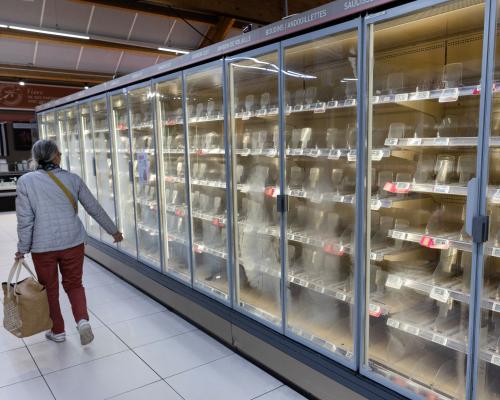
Rogue French fridges were an unlikely talking point(话题;讨论焦点) for the world’s leading economists, central bankers and finance chiefs meeting in a sultry(闷热的;潮湿的) Bangkok last week – helping to underline the spiralling cost(不断攀升的成本) of cyber-attacks.
上周,全球顶尖经济学家、央行行长和财政官员齐聚闷热的曼谷,法国那些被黑的冰箱竟成了出人意料的议题——这凸显出网络攻击成本正不断攀升。
Kristalina Georgieva, the managing director of the International Monetary Fund, seized on(抓住;利用) news that supermarket chains across France had to chuck out(扔掉;丢弃) piles of spoiled(变质的;腐坏的) food after hackers accessed their fridge controls and turned up(调高;调大) the temperature to 50C.
国际货币基金组织总裁克里斯塔利娜·格奥尔基耶娃抓住了一则新闻大做文章:法国各地连锁超市在黑客侵入冰箱控制系统、将温度调高至50摄氏度后,不得不扔掉成堆的变质食物。
Speaking at the fund’s annual meetings in the Thai capital, she was keen to hammer home the importance of guarding against “bad actors” in a rapidly changing, interconnected world – especially now that AI was “putting the potential of digital fraud on steroids”.(在泰国首都举行的IMF年会上,她着力强调:在这个瞬息万变、互联互通的世界里,防范“不良行为者”至关重要——尤其是如今人工智能正“让数字欺诈的潜力变得极其强大”。)
在泰国首都举行的IMF年会上,她着力强调:在这个瞬息万变、互联互通的世界里,防范“不良行为者”至关重要——尤其是如今人工智能正“让数字欺诈的潜力变得极其强大”。