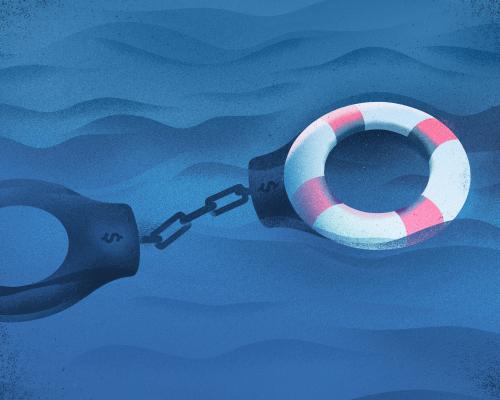
Not much has gone right for the global economy this year, and plenty has gone wrong. Two big regional wars are destabilising(使不稳定、扰乱) prices and supply chains everywhere. Businesses and consumers are feeling the effects of a serious energy shock. Rising inflation has made it a lot more expensive for governments to finance their debts. China and the US are at loggerheads(争执不下、对立) over trade.
今年全球经济没多少顺心事,出问题的地方倒是不少。两场大规模地区战争正在扰乱各地的物价和供应链。企业和消费者正感受到严重能源冲击的影响。通胀上升使政府为债务融资的成本大幅增加。中美两国在贸易问题上僵持不下。
Yet, so far, the impact has been modest. It is something of a miracle that the finance ministers and central bank governors gathered for this year’s annual meeting of the International Monetary Fund (IMF) in Bangkok are not having to deal with a full-blown crisis.(齐聚曼谷参加IMF年会的各国财长和央行行长竟不必应对全面危机,堪称奇迹。) This is not like the autumn of 2008, when the meetings took place during the worst of the global banking meltdown(崩溃、熔毁).
然而,迄今为止影响还算温和。齐聚曼谷参加国际货币基金组织(IMF)今年年会的各国财长和央行行长们,竟然不必应对一场全面危机,这简直是个奇迹。这与2008年秋天不同,当时会议是在全球银行业崩溃最严重的时期召开的。
The IMF is right when it says countries have shown resilience(韧性、恢复力) when having to cope with so many headwinds(逆风、不利因素). It could have been worse. A lot worse. There was even some good news for the UK, with the IMF upgrading its growth forecast for this year and praising the government for its deficit-reduction plan(减赤字计划).
IMF说各国在应对如此多逆风时表现出韧性,这话没错。情况本可能更糟,糟得多。英国甚至迎来了一些好消息:IMF上调了其今年的增长预测,并称赞了政府的减赤字计划。