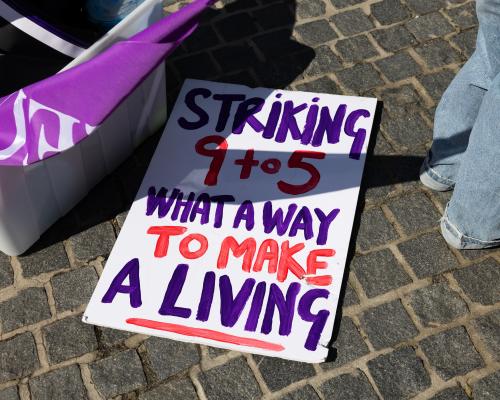
There’s an air of uncertainty(一种不确定的气氛) around my university campus. This week, many of our lecturers and tutors(辅导教师) at the University of Melbourne are taking part in(参加) a national strike and week-long teaching ban; all but two of my classes have been cancelled. Posters announcing the industrial action(劳工行动) are everywhere. Students are speculating about whether classes will resume by the end of semester or whether last Friday was, unexpectedly, our last day on campus for the year.(学生们在猜测课程是否会在学期结束前恢复,或者上周五是否意外地成了我们今年在校园里的最后一天。) We’re wondering whether our assessments(考核/作业) will even be marked and what will happen to our marks and postgraduate plans as a result.
我的大学校园里弥漫着一种不确定的气氛。本周,我们墨尔本大学的许多讲师和辅导教师正在参加一场全国性的罢工和为期一周的教学禁令;我的课除了两门之外全部被取消。宣布此次劳工行动的海报随处可见。学生们在猜测课程是否会在学期结束前恢复,或者上周五是否意外地成了我们今年在校园里的最后一天。我们不知道自己的作业是否还会被批改,也不知道这会给我们的成绩和读研计划带来什么影响。
Quite frankly(坦率地说), this sense of instability isn’t new to my university experience and it’s not just my university. In recent years, Australian tertiary education has been plagued by sharp and uneven fee hikes under the job-ready graduates scheme, controversy surrounding the management of pro-Palestine protests, difficulty regulating the use of AI and more.(近年来,澳大利亚的高等教育饱受困扰:在“就业准备毕业生”计划下学费急剧且不均衡地上涨,亲巴勒斯坦抗议活动的管理引发争议,人工智能的使用难以监管,等等。)
坦率地说,这种不稳定感对我的大学经历来说并不新鲜,而且也不只是我的大学如此。近年来,澳大利亚的高等教育饱受困扰:在“就业准备毕业生”计划下学费急剧且不均衡地上涨,亲巴勒斯坦抗议活动的管理引发争议,人工智能的使用难以监管,等等。
It feels like, after years of dissatisfaction with universities’ handling of problems and the government’s treatment of the tertiary sector, staff have finally had enough(忍无可忍). A week-long teaching ban, near the end of semester – which throws our final assessments and grades into uncertainty – is a serious disruption.(在学期临近结束时实施为期一周的教学禁令——这让我们的期末考核和成绩陷入不确定——是一次严重的扰乱。)
感觉像是,在对大学处理问题的方式和政府对高等教育部门的对待不满多年之后,教职员工终于忍无可忍了。在学期临近结束时实施为期一周的教学禁令——这让我们的期末考核和成绩陷入不确定——是一次严重的扰乱。