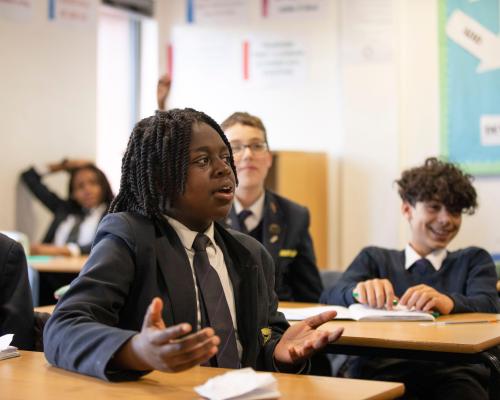
At last the fourth R(第四项“R”) is born. Articulation – speaking – is to join reading, writing and arithmetic in the education canon(经典;正典). What has become the mighty struggle against the dictatorship of the screen(屏幕的专制) can begin in earnest(认真地;正式地). The spoken word, human-to-human communication, must finally be recognised by the gods of reactionary(反动的;保守的) schooling. The pundits call it oracy(口语能力).
第四项“R”终于诞生了。发音——也就是说话——即将与读、写、算一同进入教育经典。一场对抗屏幕专制的伟大斗争,终于可以正式开始了。口头语言,即人与人之间的交流,必须最终得到保守教育之神的认可。专家们称之为“口语能力”。
On Thursday, the education secretary, Lucy Powell, called the academics’ bluff(戳穿学术界的虚张声势). She wants a radical(彻底的;激进的) reform of the national curriculum in England to reduce “desktop” working in favour of(转而支持;有利于) verbal fluency and practical skills. This will take courage. For decades, education’s senior leaders have been ramming easily forgotten “subjects”, such as maths and French, into children’s brains so they can be judged and measured in league tables.(几十年来,教育界高层一直把数学、法语等容易被遗忘的“科目”硬塞进孩子的脑袋,为的是用排行榜来评判和衡量他们。) These tables have grown ever more dominant as ministers seek to climb “global rankings”.
周四,教育大臣露西·鲍威尔戳穿了学术界的虚张声势。她希望彻底改革英格兰的国家课程,减少“伏案”学习,转而重视口头流利度和实用技能。这需要勇气。几十年来,教育界高层一直把数学、法语等容易被遗忘的“科目”硬塞进孩子的脑袋,为的是用排行榜来评判和衡量他们。随着部长们谋求提升“全球排名”,这些排行榜变得愈发强势。
After the second world war, an “academic” secondary education was shaped by the increased demand for a university-educated workforce. Higher education was expanded, but Britain’s technical and vocational(职业的) schools and colleges were relegated out of sight(被贬到无人问津). Teaching became enslaved to(沦为……的奴隶) exam quantification(量化) and lost contact with the real world.
二战后,对受过大学教育的劳动力的需求增加,塑造了“学术型”中等教育。高等教育得到扩张,但英国的技术与职业学校却被贬到无人问津的角落。教学沦为考试量化的奴隶,与现实世界脱节。