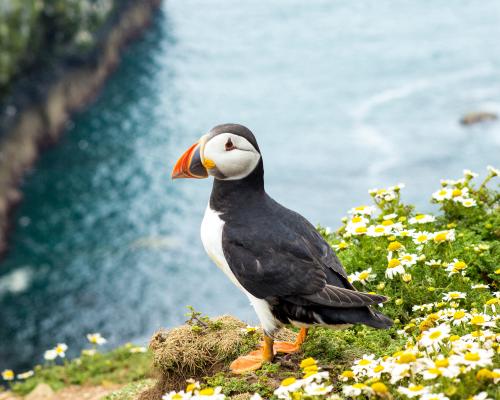
For centuries human beings have exploited(利用,剥削) puffins, harvesting(捕杀,收获) them by the thousand(成千上万地) on their breeding grounds for their food and feathers. Over time, though, this relationship has changed, so that today we have come to love them, celebrating their quirky(古怪的,离奇的) character and comical appearance and giving them a central place in our affections – a journey described by the environmental historian Dr Rob Lambert as the shift “from use to delight(从利用到愉悦)”.
几个世纪以来,人类一直在利用海鹦,在它们的繁殖地成千上万地捕杀,以获取其肉和羽毛。然而,随着时间的推移,这种关系发生了变化,以至于今天我们开始喜爱它们,赞美它们古怪的性格和滑稽的外表,并把它们放在我们情感的中心位置——环境历史学家罗布·兰伯特博士将这一历程描述为“从利用到愉悦”的转变。
How ironic, then, that just as we have come to truly appreciate them, our own existence now threatens theirs.(多么讽刺,就在我们真正开始欣赏它们时,我们自己的生存却威胁到了它们。) The climate crisis threatens almost all the world’s roughly 11,000 species of birds, but its consequences have particularly dire(严重的,可怕的) significance for seabirds, whose life cycle is so intimately connected to(与……密切相关) the timing and abundance of their food supplies.
那么,颇具讽刺意味的是,就在我们真正开始欣赏它们的时候,我们自己的生存却威胁到了它们的生存。气候危机威胁着世界上几乎所有的约1.1万种鸟类,但其后果对海鸟来说尤为严重,因为海鸟的生命周期与食物供应的时间和数量密切相关。
Warming oceans result in fish such as sand eels(玉筋鱼) shifting their range into cooler waters, and thus either declining or disappearing from the seas around seabird breeding colonies. If puffins need to travel further to their feeding areas, or take longer to find and catch food once they get there, then their chicks have a lower chance of fledging.(如果海鹦需要到更远的地方觅食,或者到达后需要更长时间才能找到并捕获食物,那么它们的雏鸟成功长出飞羽的概率就会降低。)
海洋变暖导致玉筋鱼等鱼类向更冷的水域迁移,从而在海鸟繁殖地周围的海域数量减少甚至消失。如果海鹦需要到更远的地方觅食,或者到达后需要更长时间才能找到并捕获食物,那么它们的雏鸟成功长出飞羽的概率就会降低。