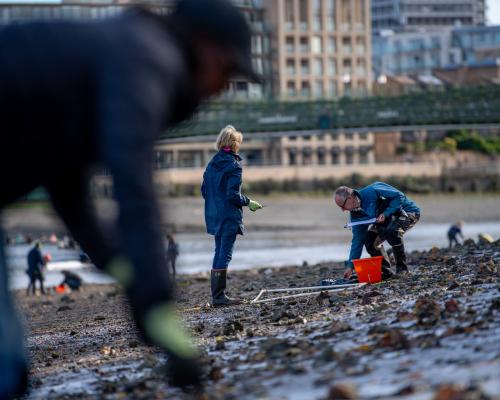
On a pale-blue Sunday morning on the foreshore(河滩;前滩) of the River Thames, 40 people are searching for what others have tried to lose. Dotted across a 250-metre stretch under Hammersmith Bridge, they are combing through layers of silt(淤泥;粉砂), seashells and dirty driftwood(浮木;漂流木) to find one of the river’s most stubborn(顽固的;难解决的) problems: wet wipes.
一个淡蓝色的周日清晨,在泰晤士河的河滩上,40个人正在寻找别人试图丢弃的东西。他们散布在汉默史密斯桥下250米长的一段河岸上,翻查层层淤泥、贝壳和脏兮兮的浮木,要找出这条河最顽固的问题之一:湿巾。
“People come and walk here and it looks just like mud, at a distance(从远处;隔一段距离),” says the organiser, Dr Felicity Rhodes. “And then you get closer in and see.”(“可等你走近一看,就看见了。”)
“人们来这里散步,远远看去,这儿就像一片烂泥,”组织者费利西蒂·罗兹博士说,“可等你走近一看,就看见了。”
The dig forms part a citizen science(公民科学;公众参与式科研) project that has tracked sanitary litter(卫生用品垃圾) on the banks of the Thames for nearly a decade. Set up by the environmental charity Thames21, volunteers are recruited to help map out(摸清;绘制;规划) the amount of wipes that are flush(冲(马桶);冲刷)ed down the toilet and washed up along the river. Findings are added to a database that quantifies plastic pollution on the banks of the Thames.
这次挖掘是公民科学项目的一部分,该项目追踪泰晤士河岸的卫生用品垃圾已近十年。项目由环保慈善机构泰晤士21发起,招募志愿者协助摸清被冲下马桶、又冲上河岸的湿巾数量。调查结果会被录入一个量化泰晤士河岸塑料污染的数据库。