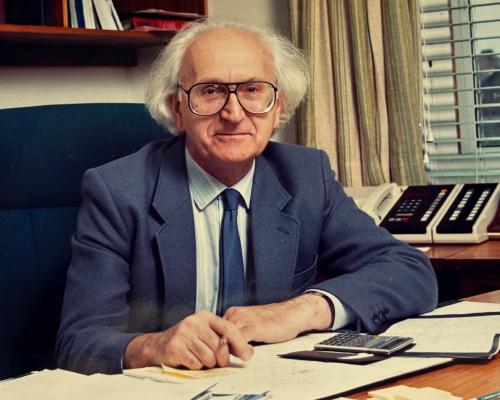
Cyril Hilsum’s research into stable liquid crystals and the devices in which they could be used paved the way for the flat-panel television and computer screens that are now ubiquitous in homes, offices and public spaces.(西里尔·希尔苏姆对稳定液晶及其应用器件的研究,为如今在家庭、办公室和公共场所无处不在的平板电视和电脑屏幕铺平了道路。)
西里尔·希尔苏姆对稳定液晶及其应用器件的研究,为如今在家庭、办公室和公共场所无处不在的平板电视和电脑屏幕铺平了道路。
Hilsum, who has died aged 101, was leading a Ministry of Defence team at the Royal Radar Establishment (RRE) in Malvern, Worcestershire, in the late 1960s when Harold Wilson’s Labour government, looking to develop a new generation of miniature radar systems, tasked him with creating flat displays to replace the bulky cathode-ray-tube screens used for traditional radar set-ups.(希尔苏姆享年101岁。20世纪60年代末,他正在伍斯特郡马尔文市的皇家雷达研究所(RRE)领导一个国防部团队。当时,哈罗德·威尔逊的工党政府希望开发新一代微型雷达系统,责成他研制平板显示器,以取代传统雷达装置中使用的笨重阴极射线管屏幕。)
希尔苏姆享年101岁。20世纪60年代末,他正在伍斯特郡马尔文市的皇家雷达研究所(RRE)领导一个国防部团队。当时,哈罗德·威尔逊的工党政府希望开发新一代微型雷达系统,责成他研制平板显示器,以取代传统雷达装置中使用的笨重阴极射线管屏幕。
Realising the key to flat-screen technology was the emerging science of liquid crystals, Hilsum organised a meeting of liquid crystal researchers – and soon realised there was only one person in the room who really understood anything about them: George Gray, from Hull University.(希尔苏姆意识到平板屏幕技术的关键在于新兴的液晶科学,于是组织了一次液晶研究人员的会议——很快他就发现,房间里只有一个人真正了解液晶:来自赫尔大学的乔治·格雷。)
希尔苏姆意识到平板屏幕技术的关键在于新兴的液晶科学,于是组织了一次液晶研究人员的会议——很快他就发现,房间里只有一个人真正了解液晶:来自赫尔大学的乔治·格雷。