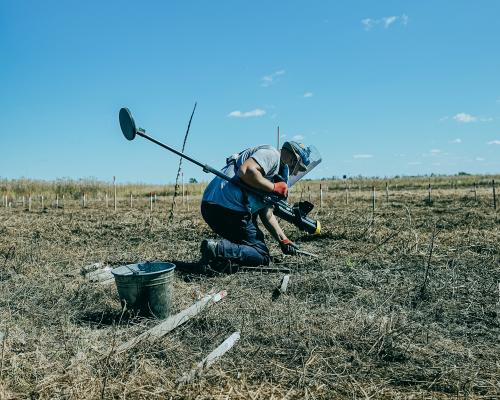
Crouched(蹲伏) over on her hands and knees(双手双膝着地) in a field of weeds, Olena Kabanova is digging into the ground. With a shovel and a steady(稳的) hand, the 58-year-old digs out a neat square around the spot where a mine detector has sensed a suspicious(可疑的) object.
奥莱娜·卡巴诺娃趴在一片杂草丛生的田地里,双手双膝着地,正往地下挖。这位58岁的妇女手握铁锹,稳稳地绕着探雷器探测到可疑物体的位置,挖出一个整齐的方形坑。
Four years ago, this field in eastern Ukraine was occupied by Russian soldiers. Now back under Ukrainian control, it is littered(布满) with landmines. Civilians such as Kabanova are trying to make the land usable(使土地可用) again.
四年前,乌克兰东部的这片田地曾被俄罗斯士兵占领。如今虽已回到乌克兰控制之下,却布满了地雷。像卡巴诺娃这样的平民正努力让土地重新可用。
Landmines are a scourge(祸害) of conflict zones. Littered across contested territory(争议领土), they leave land unusable for years after a war has ended. Removing them is an expensive and dangerous job. And the use of long-range drones in Ukraine, which is often described as the most mine-contaminated country in the world, is increasing the scale of the problem.(而乌克兰——常被称为世界上地雷污染最严重的国家——远程无人机的使用正在加剧这一问题的规模。)
地雷是冲突地区的祸害。它们散落在争议领土上,让土地在战争结束多年后仍无法使用。清除地雷既昂贵又危险。而乌克兰——常被称为世界上地雷污染最严重的国家——远程无人机的使用正在加剧这一问题的规模。