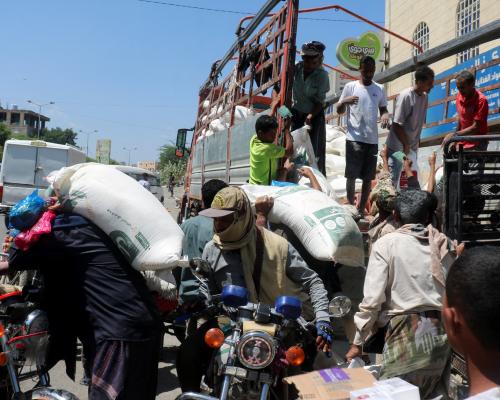
Ali Abdulsamed spent all day waiting and walking. Like many people in the besieged(被围困的) Yemeni city of Taiz, he was searching for some food for his family of six. But each time he reached the end of the queue at the grocers(杂货店), he was greeted with(受到……的对待) empty shelves. He would go on foot to the next shop, unable to afford the price of petrol, which more than doubled last week.(他只能步行去下一家店,因为付不起上周翻了一倍多的汽油钱。)
阿里·阿卜杜勒萨迈德整天都在等待和奔走。像也门被围困城市塔伊兹的许多人一样,他正在为一家六口寻找食物。但每次他排到杂货店队伍的前头,迎接他的都是空荡荡的货架。他只能步行去下一家店,因为付不起上周翻了一倍多的汽油钱。
After visiting more than a dozen stores, Abdulsamed managed to(设法做到) find a 25kg bag of wheat flour – sold at more than twice its usual price. It would have to do(只能将就了), he was lucky to find anything at all.
跑了十几家店后,阿卜杜勒萨迈德总算找到了一袋25公斤装的小麦面粉——售价是平时的两倍多。只能将就了,能找到东西已经算他走运。
As Iran-allied Houthi rebels advance and the Saudi-backed Yemeni government forces closes off routes into the city, conditions in Taiz have become increasingly difficult.(随着伊朗支持的胡塞叛军推进,沙特支持的也门政府军封锁进入该市的道路,塔伊兹的状况日益艰难。) Yemen’s third most populous city has found itself besieged(发现自己被围困) from all sides, with its supplies of fuel, food and other basic goods cut off.
随着伊朗支持的胡塞叛军推进,沙特支持的也门政府军封锁进入该市的道路,塔伊兹的状况日益艰难。这座也门第三大城市发现自己四面受围,燃料、食品和其他基本物资的供应被切断。