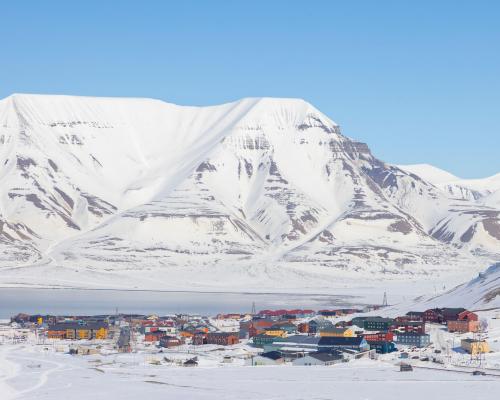
On a rugged(崎岖的) mountain plateau of snow-dusted rocks, in the remote archipelago(群岛) of Svalbard, a glaciologist(冰川学家), Andy Hodson, points out(指出) the “ears” of ice, white against the rock, that gave Foxfonna glacier(福克斯冰川,因冰形似北极狐耳朵得名) its name, after the arctic fox.
在偏远的斯瓦尔巴群岛,一片崎岖的山地高原上覆盖着薄雪的岩石,冰川学家安迪·霍德森指着岩石上白色的冰“耳朵”——正是这些冰耳让福克斯冰川得名,其名字源自北极狐。
The small glacier, on a mountain 8 miles (15km) outside the Norwegian village of Longyearbyen, is a popular summer hike(徒步) for tourists who come here seeking the Arctic experience(寻求北极体验).
这座小冰川位于挪威朗伊尔城外的山上,距村庄8英里(15公里),是游客夏季徒步的热门去处,他们来此寻求北极体验。
But in Svalbard, where glaciers cover 57% of the land and temperatures are rising up to seven times faster than the global average, making it one of the fastest-warming places on Earth, Foxfonna is changing rapidly.(但在斯瓦尔巴,冰川覆盖57%的陆地,气温上升速度最高达全球平均的七倍,使其成为地球上变暖最快的地方之一,福克斯冰川正在迅速变化。)
但在斯瓦尔巴,冰川覆盖了57%的陆地,气温上升速度最高可达全球平均水平的七倍,使其成为地球上变暖最快的地方之一,福克斯冰川正在迅速变化。