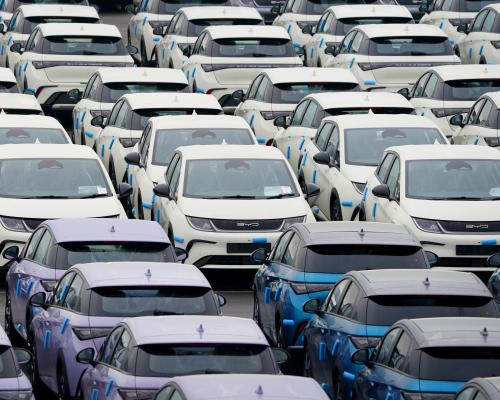
Electric cars make people happy. More than nine in 10(十分之九) EV drivers – 94% in a recent poll(民意调查) – are saving money, and a similar number would stick with(坚持使用) electric for their next purchase, and recommend them to family and friends. Sales are soar(猛增)ing: more than half of the new cars sold in the UK last month were electric, if hybrids are taken into account, and about 28% of new car sales overall were electric only.
电动汽车让人满意。最近一项民调显示,超过九成(94%)的电动汽车车主表示省钱,差不多同样比例的人下次购车仍会选择电动车,并会向亲友推荐。销量飙升:上个月英国售出的新车中,如果算上混合动力车,超过一半是电动;纯电动车约占新车总销量的28%。
This is hardly surprising(毫不奇怪), given that(考虑到) soaring petrol and diesel(柴油) costs have pushed up the price of a full tank to about £120. EV drivers are paying about 2.4p a mile.
这并不奇怪,因为汽油和柴油价格飙升,加满一箱油已涨到约120英镑。而电动汽车司机每英里只需支付约2.4便士。
Why then is the government considering a major U-turn(政策急转弯) on electric vehicle policy that, if followed through, could stall(阻碍) the take-up(采用率) of EVs, help to close off(堵死) a route to lower living costs, and dent(削弱) the UK’s ability to meet its carbon targets?
那么,政府为何要考虑对电动汽车政策进行重大逆转?如果付诸实施,这一逆转可能阻碍电动汽车的普及,堵死一条降低生活成本的途径,并削弱英国实现碳目标的能力。