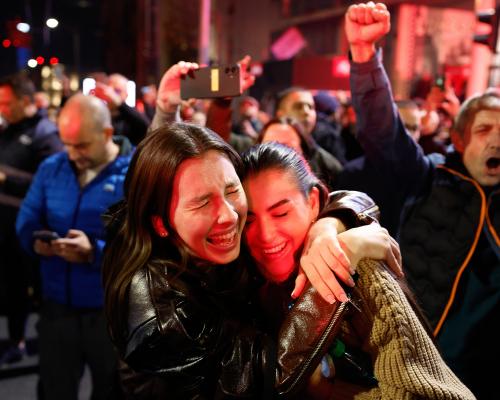
The long-serving leader of Serbia, Aleksandar Vučić, has conceded(承认(失败)) defeat, ushering in(开启,引入) a seismic(地震般的,巨大的) political shift after a historic election that saw the increasingly authoritarian(专制的,威权的) leader pitted against(与……较量,使对抗) a student-led movement that had spent two years protesting against his government.
塞尔维亚长期执政的领导人亚历山大·武契奇承认败选,开启了一场政治地震般的转变。此前,一场历史性选举让这位日益专制的领导人与一个已抗议其政府两年的学生运动展开对决。
Vučić pointed to preliminary results that suggested voters had overwhelmingly backed the students, potentially giving them a majority in the country’s 250-seat parliament.(武契奇指出,初步结果显示选民压倒性地支持学生,这可能使他们在该国250个席位的议会中占据多数。)
武契奇指出,初步结果显示选民压倒性地支持学生,这可能使他们在该国250个席位的议会中占据多数。
“We still do not have final results,” Vučić told supporters at his party headquarters(总部) in Belgrade. “On the basis of(根据,基于) a sample … it is clear that we have lost these elections, the Student List has won, they will have between 135 and 140 seats and we will have 105.”
“我们还没有最终结果,”武契奇在贝尔格莱德该党总部对支持者说。“根据样本……很明显我们输掉了这次选举,学生名单赢了,他们将获得135到140个席位,我们将获得105个。”