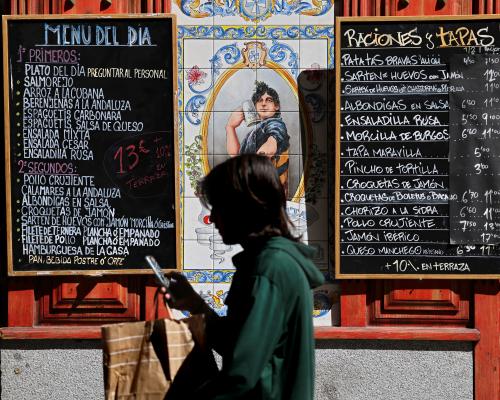
A little before lunchtime each working day across Spain, evidence of one of the lingering(挥之不去的、残留的), if less notorious(虽然不那么臭名昭著), legacies of the Franco dictatorship is carefully traced in chalk, marker pen and printer ink.
在西班牙各地,每个工作日临近午饭时分,人们都会用粉笔、记号笔和打印墨水,一笔一画地写下佛朗哥独裁统治遗留下来的痕迹之一——它虽不那么臭名昭著,却延续至今。
Beckoning to hungry workers from blackboards, whiteboards and pieces of paper hastily taped to windows(匆匆贴在窗户上的), the competitively priced(价格有竞争力的、实惠的) menú del día, or daily set-price lunch, has been part of everyday Spanish life for more than half a century. But while 4m menús are still served each weekday, Spain is slowly losing its appetite for the familiar ritual(仪式、惯例).
黑板、白板以及匆匆贴在窗户上的纸片,都在向饥肠辘辘的上班族招手;这种价格实惠的“每日套餐”(menú del día),也就是每日固定价格午餐,已成为西班牙人日常生活的一部分,延续了半个多世纪。然而,尽管每个工作日仍能卖出400万份套餐,西班牙人对这一熟悉仪式的胃口却在慢慢消退。
Back in 2009, the country’s best-known chef, Ferran Adrià, went so far as to pronounce(宣布、断言) it dead – a victim of changing eating habits, economic downturn(衰退、下滑)s and bistro-style restaurants trying to charge €20-€30 (£17-£25) for what should be a simple starter, a hearty(丰盛的、暖胃的) main and a choice of pudding or coffee … with bread and a drink thrown in(额外附赠).
早在2009年,西班牙最负盛名的厨师费兰·阿德里亚甚至断言它已经“死亡”——它成了饮食习惯变化、经济衰退以及小酒馆式餐厅的牺牲品:这些餐厅对本该是简单前菜、丰盛主菜外加甜点或咖啡(还附赠面包和饮品)的一餐,竟要价20至30欧元(约合17至25英镑)。