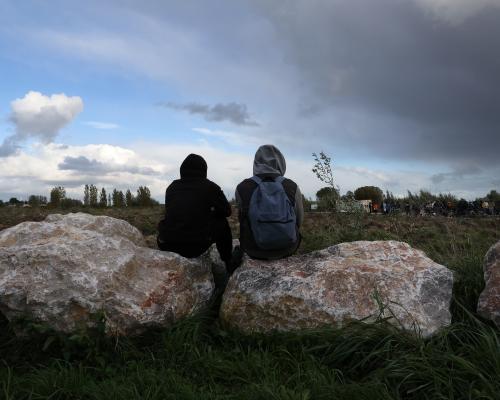
In the decade since the demolition of the “Jungle”, an area of Calais where thousands of asylum seekers set up makeshift shelters before embarking on Channel crossings to the UK, everything and nothing has changed.(加来“丛林”拆除十年后,一切似乎都变了,又似乎什么都没变。)
加来“丛林”被拆除已有十年。这片区域曾是数千名寻求庇护者搭建临时住所、随后冒险穿越英吉利海峡前往英国的地方。十年过去,一切似乎都变了,又似乎什么都没变。
This week, in a woodland clearing(林中空地) not far from one of Calais’s busy main roads, several brightly coloured tents are pitched(搭起(帐篷)). A jacket hanging from a tree branch blows in the brisk autumnal breeze alongside a belt decorated with union flags.(一件挂在树枝上的夹克在秋日凛冽的微风中飘动,旁边是一条装饰着英国国旗图案的腰带。) It is only October but the wind makes the temperature feel several degrees chillier.
本周,在距离加来一条繁忙主干道不远的林间空地上,搭着几顶色彩鲜艳的帐篷。一件挂在树枝上的夹克在秋日凛冽的微风中飘动,旁边是一条装饰着英国国旗图案的腰带。才十月,风却让气温感觉低了好几度。
“I live in a tent,” says Adam*, at a nearby charity-run phone charging session. He is an electrical engineering student from Sudan who fled his country when the war started.(他是来自苏丹的电气工程专业学生,战争爆发时逃离了自己的国家。) “We have been evicted(被驱逐) so many times. It is not worth having(不值得拥有) any possessions because the police take everything. I only have the clothes you can see me wearing now.”
“我住在帐篷里,”亚当*在附近一个慈善机构组织的手机充电点说。他是来自苏丹的电气工程专业学生,战争爆发时逃离了自己的国家。“我们被驱逐了太多次。拥有任何财物都不值得,因为警察会把一切都拿走。我只有你现在看到的我身上穿的这身衣服。”