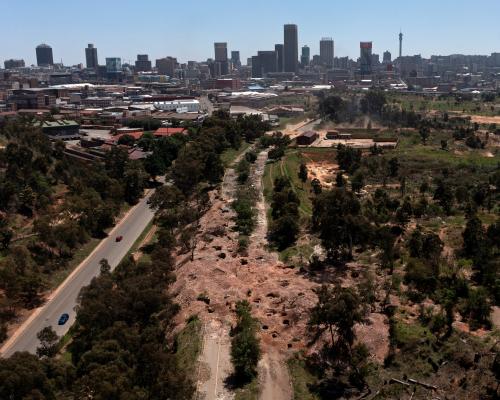
Cora Bailey has been encountering(遇到,遭遇) illegal miners ever since she first started treating injured animals in the townships around Roodepoort, west of Johannesburg, in 1991. But as the price of gold has soared(猛增,飙升), so too has(……也如此) activity in the abandoned mine shafts(矿井,竖井) that mark the area.
自1991年首次在约翰内斯堡以西鲁德普特周边的乡镇救治受伤动物以来,科拉·贝利就一直与非法矿工不期而遇。但随着金价飙升,该地区废弃矿井中的活动也日益猖獗。
In late September, dozens of(数十,许多) zama zamas(南非非法矿工的称呼) – the name given to illegal miners in South Africa, meaning roughly “to take a chance(冒险,碰运气)” in Zulu – arrived to dig for gold across the dirt road from her charity, Claw (Community Led Animal Welfare).
九月下旬,数十名“zama zamas”(南非对非法矿工的称呼,在祖鲁语中大致意为“碰运气”)来到她的慈善机构Claw(社区主导动物福利组织)对面的土路上挖金。
Soon, they were taking water for their panning and processing from the organisation’s two 25,000-litre water tanks, which are filled irregularly by the city government for the 100 or so rescued and injured animals on site.(很快,他们开始从该组织的两个2.5万升水箱取水,用于淘金和加工。这些水箱由市政府不定期注水,供现场约100只获救和受伤的动物使用。)
很快,他们开始从该组织的两个2.5万升水箱取水,用于淘金和加工。这些水箱由市政府不定期注水,供现场约100只获救和受伤的动物使用。