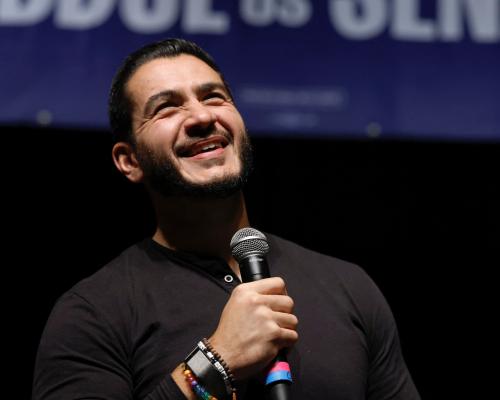
The Michigan senatorial(参议员的) candidate Abdul El-Sayed, a Democrat, occupies a strange but increasingly common place(占据奇特却日益常见的位置) in modern American politics. He’s praised by progressives, begrudgingly tolerated by moderate Democrats and largely demonized by Republicans.(他受到进步派称赞,被温和派民主党人勉强容忍,又被共和党人大加妖魔化。)
密歇根州参议员候选人、民主党人阿卜杜勒·埃尔-赛义德,在现代美国政治中占据着一个奇特却日益常见的位置。进步派称赞他,温和派民主党人勉强容忍他,共和党人则大多把他妖魔化。
He’s also uniquely positioned to forge an all-too-elusive thread of political kinship between these perpetually-at-odds groups with his bold but contentious plan for reining in AI, called AI Under Democracy.(他还拥有独特条件,能凭借其大胆而有争议的AI约束方案《民主之下的AI》,在这些长期对立的群体之间牵起一条极其难得的政治纽带。)
他还拥有独特的条件,可以凭借自己那套大胆却颇具争议的AI约束方案《民主之下的AI》,在这些长期对立的群体之间牵起一条极其难得的政治纽带。
And it couldn’t come at a better time(来得正是时候). According to a poll conducted this summer by NBC News, 70% of Americans said that they were more worried than excited about AI, a shocking reversal from just a couple of years ago.(NBC新闻今夏的一项民调显示,70%的美国人表示他们对AI的担忧多于兴奋,这与几年前相比是惊人的逆转。) Another poll from Quinnipiac(昆尼皮亚克大学) several weeks ago found that 73% of Americans are concerned about AI posing a threat to(对……构成威胁) human existence.
而它来得正是时候。NBC新闻今年夏天进行的一项民调显示,70%的美国人表示,他们对AI的担忧多于兴奋——这与短短几年前相比是一个惊人的逆转。几周前昆尼皮亚克大学的另一项民调发现,73%的美国人担心AI对人类生存构成威胁。