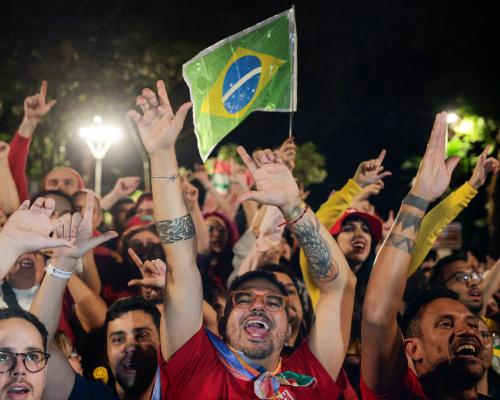
The impossible happened. President Luiz Inácio Lula da Silva won a fourth term in Sunday’s runoff election(第二轮决选) in Brazil, overturning Flávio Bolsonaro’s first-round lead(逆转首轮领先优势) in a historic comeback(翻盘、东山再起). No candidate has ever lost the first round and won the second, until now. Grassroots mobilisation, alongside social welfare policies, helped turn the contest into a referendum on Brazilian democracy, rallying voters against a candidate seeking to restore the legacy of his father, Jair Bolsonaro, imprisoned for plotting a coup after his 2022 defeat.(基层动员加上社会福利政策,帮助这场角逐变成了一场关于巴西民主的公投,号召选民抵制一位试图继承其父雅伊尔·博索纳罗政治遗产的候选人——博索纳罗在2022年败选后因策划政变而入狱。) Lula’s victory suggests that defending democracy can still be a powerful electoral argument against the ascendant(上升的、占优势的) right.
不可能的事发生了。在周日的巴西第二轮决选中,总统路易斯·伊纳西奥·卢拉·达席尔瓦赢得第四个任期,逆转了弗拉维奥·博索纳罗在首轮的领先优势,上演了一场历史性的翻盘。此前从未有候选人首轮落败后还能在次轮获胜,直到现在。基层动员加上社会福利政策,帮助这场角逐变成了一场关于巴西民主的公投,号召选民抵制一位试图继承其父雅伊尔·博索纳罗政治遗产的候选人——博索纳罗在2022年败选后因策划政变而入狱。卢拉的胜利表明,捍卫民主仍然可以成为对抗势头上升的右翼的有力选举论据。
Having already consolidated(巩固、整合) most of the leftwing vote, Lula had limited room to attract(争取……的空间有限) supporters of other candidates after his first-round defeat. His best chance lay in mobilising abstainers(弃权者、不投票者) and reconnecting with working-class voters. The Workers’ party intensified its grassroots and digital campaigns, using social media influencers and messaging networks to reach supporters. Nearly 3 million more Brazilians voted in the runoff, and Lula gained ground(取得进展、扩大优势) across the country, particularly in major cities and his north-eastern strongholds(据点、票仓). He also appealed to voters’ immediate economic concerns(诉诸选民眼下的经济关切), drawing on a record of reducing poverty and inequality(凭借减贫和缩小不平等的政绩), and increasing benefits under Bolsa Família(巴西标志性有条件现金转移福利计划), the landmark(里程碑式的、标志性的) welfare programme he launched in 2003. Lula framed(框定、界定) the election as a choice between protecting social gains and democratic institutions, or returning to the Bolsonaro family’s attacks on both, warning that his opponent would compromise(损害、危及) Brazil’s sovereignty by aligning himself with Donald Trump(与特朗普结盟).
由于已经整合了大部分左翼选票,卢拉在首轮落败后争取其他候选人支持者的空间有限。他最大的机会在于动员弃权选民,并重新联系工薪阶层选民。劳工党加强了基层和数字竞选活动,借助社交媒体网红和即时通讯网络接触支持者。第二轮投票中多了近300万巴西选民参与,卢拉在全国范围内扩大优势,尤其是在大城市和他的东北部票仓。他还诉诸选民眼下的经济关切,凭借减贫和缩小不平等的政绩,以及提高“家庭补助金”的福利——这是他2003年推出的标志性福利计划。卢拉把这场选举框定为一道选择题:是保护社会成果和民主制度,还是回到博索纳罗家族对二者的攻击;他警告对手若与唐纳德·特朗普结盟,将损害巴西的主权。
The implications(影响、后果) extend far beyond Brazil. Lula’s victory interrupts a regional trend(打断地区趋势): rightwing candidates have won seven presidential elections across Latin America in the past 18 months. Two decades ago, Lula was among the leaders of Latin America’s pink tide(拉美左翼执政浪潮), a succession of(一连串的) leftwing governments that reshaped the region’s politics and sought greater autonomy(自主、自治) from Washington. Today, he finds himself resisting a new regional wave moving in the opposite direction, without a comparable coalition of allies.(如今,他却在抵抗一股方向相反的新地区浪潮,而且没有可与之比肩的盟友联盟。)
其影响远远超出巴西。卢拉的胜利打断了一个地区趋势:过去18个月里,右翼候选人在拉丁美洲赢得了七场总统选举。二十年前,卢拉是拉美“粉红浪潮”的领导人之一——那是一连串重塑地区政治、寻求更大程度摆脱华盛顿自主的左翼政府。如今,他却在抵抗一股方向相反的新地区浪潮,而且没有可与之比肩的盟友联盟。