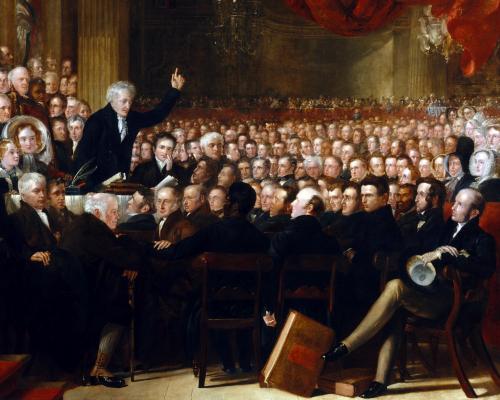
On 28 October 1787, Thomas Clarkson pushed through the crowds to reach the pulpit(讲道坛) of Manchester Cathedral. A campaigner for abolishing slavery, he spoke urgently about the horrors of the slave trade and the humanity of enslaved people.(作为废奴运动的倡导者,他急切地讲述奴隶贸易的恐怖与被奴役者的人性。) “He drinks the cup of sorrow(悲伤之杯),” Clarkson said. “And he drinks it at our hands.”
1787年10月28日,托马斯·克拉克森挤过人群,登上曼彻斯特大教堂的讲道坛。作为废奴运动的倡导者,他急切地讲述奴隶贸易的种种恐怖,以及被奴役者的人性尊严。“他饮下那杯悲伤,”克拉克森说,“而这杯苦酒,是我们亲手递上的。”
During Black History Month(黑人历史月), these are the stories it is important to remember. They show us the complicated truth of our history. Thousands of people in Manchester signed a petition(请愿书) against slavery after Clarkson’s sermon(布道). And yet Manchester’s cotton industry was built on the labour of enslaved people. There are similar stories up and down the nation. We are a country where brave people led the way in abolishing slavery, but we are also a country that participated in the trade in human lives.(我们是一个由勇敢者率先废除奴隶制的国家,但也是一个曾参与人口买卖的国家。)
在“黑人历史月”期间,这些故事值得铭记。它们向我们展示了我国历史的复杂真相。克拉克森布道之后,曼彻斯特数千人签署了反对奴隶制的请愿书。然而,曼彻斯特的棉纺织业恰恰建立在被奴役者的劳动之上。全国各地都有类似的故事。我们是一个由勇敢者率先推动废除奴隶制的国家,但也是一个曾参与人口买卖的国家。
The transatlantic(跨大西洋的) slave trade was a brutal and barbaric(野蛮残暴的) violation(侵害、侵犯) of those people. They were denied their humanity. They were separated from their families, treated as property and worked to their deaths.(他们与家人骨肉分离,被当作财产对待,被劳作折磨至死。) I want to express my sorrow and regret for the pain and suffering of so many millions of people, and to recognise the way it still shapes our world(塑造我们的世界) today.
跨大西洋奴隶贸易是对这些人的残暴而野蛮的侵害。他们的人性被剥夺,与家人骨肉分离,被当作财产对待,被劳作折磨至死。我要为千百万人的痛苦与苦难表达悲痛与遗憾,并正视这段历史至今仍在塑造我们世界的现实。