Gajju Khan is smiling as he sits in an unfinished building in the northern Indian state of Punjab in the late afternoon. The 87-year-old is hopeful that before he dies he will hear the azaan, the Muslim call to prayer, echo across his village once again when the mosque is completed.(这位87岁的老人希望在有生之年,当清真寺落成时,能再次听到宣礼声回荡在村庄上空。)
傍晚时分,加朱·汗坐在印度北部旁遮普邦一栋未完工的建筑里,面带微笑。这位87岁的老人满怀希望:清真寺落成后,他能在有生之年再次听到宣礼声——穆斯林的礼拜召唤——回荡在村庄上空。
The last time he heard it here was when he was eight years old, living with his parents in Tira Maloya, a village in Chandigarh, not far from where he lives now.(他上一次在这里听到宣礼声,还是八岁那年,当时他和父母住在昌迪加尔的提拉马洛亚村,离他现在住的地方不远。)
他上一次在这里听到宣礼声,还是八岁那年,当时他和父母住在昌迪加尔的提拉马洛亚村,离他现在住的地方不远。
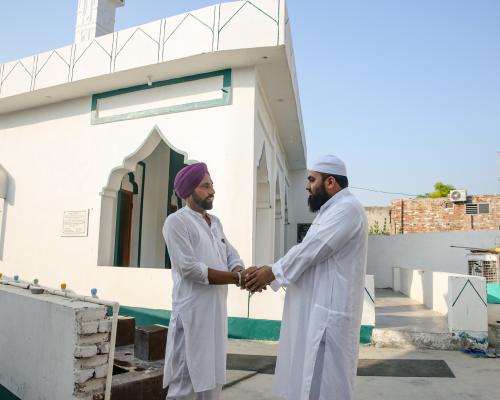
He is also excited because the mosque has been funded almost entirely by the Sikhs and Hindus living in his village of Jakhiwal, in Fatehgarh Sahib district. Even though he fondly remembers how Sikh neighbours sheltered him and his brothers when brutal sectarian violence erupted during partition in 1947, he never expected a house of worship to be rebuilt for the 18 Muslim families who remain in the village.(尽管他深情地记得,1947年印巴分治期间爆发残酷的教派暴力时,锡克邻居如何庇护他和他的兄弟,但他从未想过会为村里剩下的18个穆斯林家庭重建一座礼拜场所。)
他也很激动,因为这座清真寺几乎完全由他所在的法泰赫加尔萨希布县贾基瓦尔村的锡克教徒和印度教徒出资修建。尽管他深情地记得,1947年印巴分治期间爆发残酷的教派暴力时,锡克邻居如何庇护他和他的兄弟,但他从未想过会为村里剩下的18个穆斯林家庭重建一座礼拜场所。