It was mid-April and after a month of deadly airstrikes(空袭) across Lebanon, Israel agreed to a ceasefire(同意停火). Much of the bombing had focused on southern Lebanon, where entire villages had been demolished(被摧毁,被夷平). But with the truce(停火,休战), people were hopeful of being able to return to their homes or to see what remained.
那是四月中旬,在经历了一个月的致命空袭后,以色列同意停火。大部分轰炸集中在黎巴嫩南部,整座整座的村庄被夷为平地。但停火协议让人们对重返家园或查看残存之物燃起了希望。
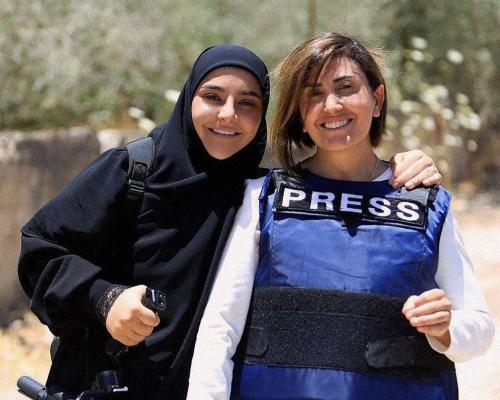
Zeinab Faraj, a 21-year-old photojournalist(摄影记者), decided to join Amal Khalil, 42, a newspaper reporter in Lebanon, on a trip to an area in the south of the country to document the aftermath of war(记录战争后果). The two had worked together on a number of assignments after Khalil had seen Faraj’s work on social media and contacted her.(两人此前已多次合作,因为哈利勒在社交媒体上看到法拉杰的作品后联系了她。)
21岁的摄影记者泽纳布·法拉杰决定与42岁的黎巴嫩报纸记者阿迈勒·哈利勒同行,前往该国南部一个地区记录战争后果。此前,哈利勒在社交媒体上看到法拉杰的作品并联系了她,两人已合作完成过多次报道任务。
“I expected it to be like every other time. Amal and I would go out, take some footage(素材,影像片段) and then leave. I had absolutely no sense of fear. We could hear some gunfire and artillery(火炮,炮击), but as a videographer(摄像师), you find those things important to document and capture,” says Faraj, who was freelancing alongside finishing her degree(一边做自由职业一边完成学位) in radio and TV.
“我以为会和往常一样。我和阿迈勒出去拍些素材,然后离开。我完全没有恐惧感。我们能听到一些枪炮声,但作为摄像师,你会觉得那些东西值得记录和捕捉,”法拉杰说。她当时一边做自由职业,一边完成广播电视专业的学位。