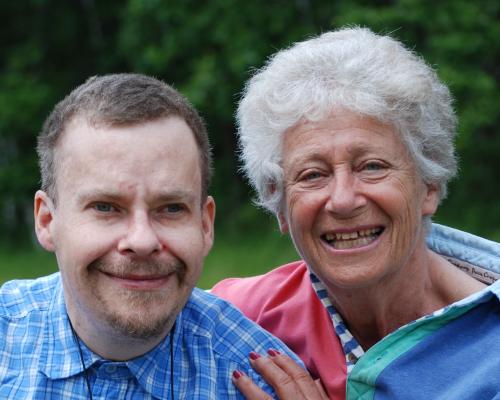
In 1984 Jean Phillips-Martinsson, a British woman living in Sweden, came across(偶然发现) an article in the Lancet. It was about Prader-Willi syndrome (PWS), a rare genetic condition named after Andrea Prader and Heinrich Willi, two of the three Swiss paediatricians who discovered it in 1956.(文章讲的是普拉德-威利综合征,一种以安德烈亚·普拉德和海因里希·威利命名的罕见遗传病,二人是1956年发现该病的三位瑞士儿科医生中的两位。)
1984年,旅居瑞典的英国女性琼·菲利普斯-马丁松偶然在《柳叶刀》上读到一篇文章,讲的是普拉德-威利综合征(PWS)。这是一种罕见的遗传病,名称来自安德烈亚·普拉德和海因里希·威利——1956年发现该病的三位瑞士儿科医生中的两位。
It was a lightbulb moment for Phillips-Martinsson, who had been in limbo for 14 years, wanting to know why her son, Anders, born in 1970, was floppy and unable to suck as a baby, and later had behavioural problems and was constantly hungry (hyperphagia).(对菲利普斯-马丁松来说,这是豁然开朗的一刻:十四年来她一直悬着心,想知道1970年出生的儿子安德斯为何婴儿时浑身松软、不会吮吸,后来又出现行为问题、总是饿个不停。) It turned out(结果是,原来) these are all key signs of PWS.
对菲利普斯-马丁松来说,这是豁然开朗的一刻。整整十四年,她一直悬着心,想知道1970年出生的儿子安德斯为什么婴儿时期浑身软绵绵、不会吮吸,后来又出现行为问题、总是饿个不停(即过度进食)。原来这些都是PWS的典型症状。
Phillips-Martinsson contacted the article’s author, who was able to diagnose(诊断) Anders. She said her first thought was, “Are we alone in Sweden?”, and through the endocrinologist(内分泌科医生) Martin Ritzén she was put in touch with(使与……取得联系) four other families with a PWS child. They had all felt similarly isolated, and when they met for coffee on in April 1986 at Phillips-Martinsson’s house in Stockholm she said: “It was an extremely emotional situation for us all.”(他们此前都同样感到孤立无援。1986年4月,他们在菲利普斯-马丁松位于斯德哥尔摩的家中喝咖啡聚会,她说:“那一刻,我们所有人都激动不已。”)
菲利普斯-马丁松联系了文章作者,对方为安德斯作出了诊断。她说自己第一个念头是:“在瑞典,只有我们一家吗?”通过内分泌学家马丁·里岑,她联系上了另外四个有PWS患儿的家庭。这些家庭同样感到孤立无援。1986年4月,他们在菲利普斯-马丁松位于斯德哥尔摩的家中喝咖啡聚会,她说:“那一刻,我们所有人都激动不已。”