The home of 85-year-old Uta Frith does not exactly look like the latest front in the culture wars(文化战争的最新前线). Located in a serenely(宁静地) quiet corner of north-west London, it suggests a life still well lived, a set of deep interests and an idyllic(田园诗般的) kind of retirement. There are so many books that some are reachable only using a very tall ladder. The four hours I spend talking to her – and her husband Chris, an expert in schizophrenia – are an absolute pleasure. There is no sense of outrage or upset: even when I ask her about the stream of hostile and abusive emails she has recently received, she is relaxed and phlegmatic(冷静淡然的). “I tend to cope by just deleting them,” she says. “I don’t dwell on(反复琢磨;沉湎于) it.”
85岁的乌塔·弗里斯的家,看上去并不像文化战争的最新前线。它坐落在伦敦西北部一个极其安静的角落,透出一种依然充实的生活、一系列深厚的兴趣,以及田园诗般的退休时光。书多到有些只能靠一架很高的梯子才够得着。我和她——以及她丈夫克里斯(精神分裂症专家)——交谈的四个小时,绝对是种享受。这里没有愤怒或不安的气息:即便我问起她最近收到的那一连串充满敌意和辱骂的电子邮件,她也从容淡定。“我通常就是直接删掉,”她说,“不去多想。”
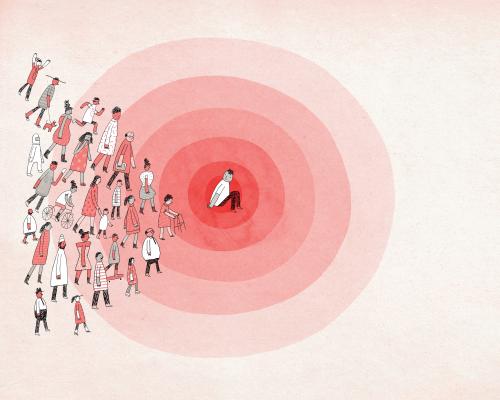
“It” is a reference to the controversy kicked up(引起;激起) by her recently expressed views on a subject that sits at the heart of Frith’s academic career: what it is to be autistic, and who should or shouldn’t qualify for a diagnosis. Back in March, Dame Uta Frith – she was honoured with the title seven years ago – gave an interview to TES magazine (formerly the Times Educational Supplement) scattered with stark(尖锐的;鲜明的) pronouncements. Among them was a claim that the so-called autistic spectrum has “gone on being more and more accommodating(包容的;迁就的)”, to the point that(以至于) it “has come to its collapse”. Then, in August, she published a piece in the academic journal Psychological Medicine claiming autism was in dire(严峻的;可怕的) danger of being turned from a “precise, clinical” term into a “vague, culturally amplified(被文化放大的) identity category”.
这里的“它”,指的是她最近就一个处于其学术生涯核心的话题所发表的观点引发的争议:自闭症究竟意味着什么,谁该、谁不该获得诊断。今年3月,乌塔·弗里斯女爵士——她七年前获封这一称号——接受了《TES》杂志(原《泰晤士报教育副刊》)采访,其中不乏尖锐论断。她声称,所谓的自闭症谱系“变得越来越包容”,以至于“已走向崩溃”。随后在8月,她在学术期刊《心理医学》上发表文章,称自闭症正面临严峻危险:从一个“精确的临床”术语,变成“模糊的、被文化放大的身份类别”。
What she said has inevitably added to the cacophony(刺耳的杂音;喧嚣) of political and media noise about rising autism diagnoses. In the UK, there was a 787% increase between 1998 and 2018, with the rise greater for women than men, and the single biggest jump among adults; credible American stats have shown an increase across the whole population of 175% between 2011 and 2022, with the largest rise occurring among 26- to 34 year-olds (in both countries, childhood rates have also leapt up(猛增;跃升)). Once, Frith agreed with the idea of a broad autistic spectrum; now, she has come to the conclusion that many people diagnosed as adults are so different from the autistic people whose condition becomes obvious in their early years and have learning disabilities that most of the former group do not merit the label “autistic” at all.(如今她得出结论:许多成年后才被诊断的人,与那些幼年即症状明显且伴有学习障碍的自闭症患者差异如此之大,以至于前者中的大多数人根本不配“自闭症”这个标签。)
她的话无疑加剧了围绕自闭症诊断人数上升的政治与媒体喧嚣。在英国,1998年至2018年间诊断人数增长了787%,女性增幅大于男性,成年人增幅最大;可靠的美国统计数据显示,2011年至2022年间全人群增长175%,其中26至34岁人群增幅最大(两国儿童诊断率也大幅攀升)。弗里斯曾认同宽泛的自闭症谱系概念;如今她得出结论:许多成年后才被诊断的人,与那些幼年即症状明显且伴有学习障碍的自闭症患者差异巨大,以至于前者中的大多数人根本不配“自闭症”这个标签。