For Donald Trump, Brazil’s presidential election was meant to represent the crest(顶峰) of the “orange wave(橙色浪潮:特朗普在拉美的右翼盟友连胜潮)” – a three-year surge(浪潮;激增) of rightwing triumphs that has reshaped Latin American politics in the US president’s tangerine-hued image(按照美国总统的橘色形象).
对唐纳德·特朗普而言,巴西总统选举本应是“橙色浪潮”的顶峰——这场持续三年的右翼胜利浪潮,按照这位美国总统的橘色形象重塑了拉丁美洲的政治格局。
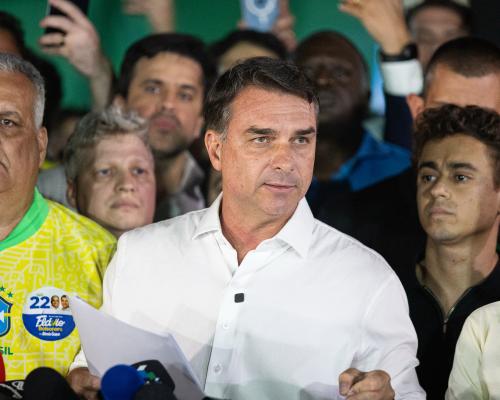
The far-right candidate, Flávio Bolsonaro, was supposed to claim the presidency on Sunday, bringing the region’s biggest democracy and economy into Trump’s orbit, after similar victories in Argentina, Bolivia, Chile, Colombia, Costa Rica, Honduras, Ecuador and Peru – not to mention the capture of Venezuela’s government after the country was invaded in January.(极右翼候选人弗拉维奥·博索纳罗本应在周日赢得总统职位,将拉美最大的民主国家和经济体带入特朗普的势力范围;此前阿根廷等多国已有类似胜利,更不用说1月委内瑞拉被入侵后政府被捕获。)
极右翼候选人弗拉维奥·博索纳罗本应在周日拿下总统职位,从而将拉美最大的民主国家和经济体纳入特朗普的势力范围。此前阿根廷、玻利维亚、智利、哥伦比亚、哥斯达黎加、洪都拉斯、厄瓜多尔和秘鲁已出现类似胜利,更不用说今年1月美国入侵委内瑞拉后捕获其政府。
But Brazilian voters had other ideas(另有想法;不赞同), turning out in huge numbers to vote against the pro-Trump populist and return the leftwing incumbent(现任者), Luiz Inácio Lula da Silva, to power. On Tuesday, as Lula celebrated his 81st birthday to the sound of samba in Brasília(巴西利亚的桑巴:巴西文化象征), Bolsonaro fled(逃离) to Miami on a private jet.
但巴西选民另有想法,他们大量出动投票反对这位亲特朗普的民粹主义者,让左翼现任总统路易斯·伊纳西奥·卢拉·达席尔瓦重新掌权。周二,当卢拉在巴西利亚伴着桑巴音乐庆祝81岁生日时,博索纳罗已乘私人飞机逃往迈阿密。