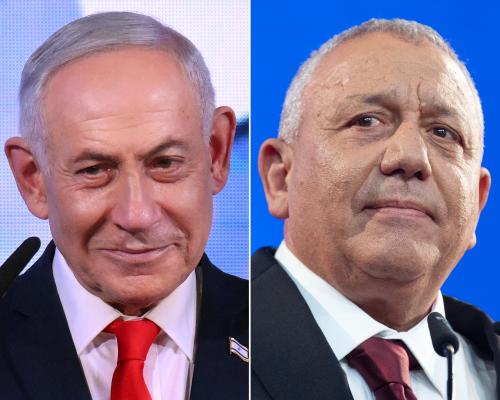
Israel’s future hung in the balance(悬而未决) on Wednesday as it became clear that Benjamin Netanyahu had lost his governing majority. His political fate now depends on whether opposition Jewish parties are prepared to forge(建立,缔造) a common front with Palestinian parties, whose support surged(激增,飙升) in Tuesday’s elections.
周三,以色列的未来悬而未决,因为本雅明·内塔尼亚胡已明显失去其执政多数地位。他的政治命运如今取决于反对派犹太政党是否愿意与巴勒斯坦政党结成共同阵线,后者在周二的选举中支持率激增。
The leader of the Jewish opposition bloc, the retired general Gadi Eisenkot, appeared to rule out(排除,不考虑) such a broad coalition in a premature(过早的,仓促的) declaration of victory overnight for what he called a “Zionist majority(犹太复国主义多数)”.
犹太反对派阵营领袖、退役将军加迪·艾森科特似乎排除了组建这种广泛联盟的可能性,他在夜间过早地宣布胜利,称自己赢得了“犹太复国主义多数”。
As the vote count proceeded on Wednesday, initial exit poll projections that Eisenkot’s bloc would have a narrow lead over Netanyahu’s coalition looked increasingly in doubt as the prime minister’s bloc edged ahead, with the votes of deployed soldiers and other absentee ballots – about 14% of the total electorate – yet to be fully counted.(随着周三计票推进,最初预测艾森科特阵营领先的出口民调显得越来越不确定,因为总理阵营逐渐反超,而约14%的军人及缺席选票尚未完全统计。)
随着周三计票工作的推进,最初出口民调预测艾森科特阵营将以微弱优势领先内塔尼亚胡的联盟,但随着总理阵营逐渐反超,这一预测显得越来越不确定,因为部署在外的士兵和其他缺席选票——约占总选民的14%——尚未完全统计。