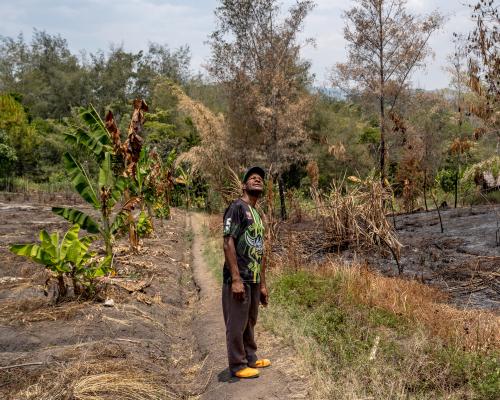
Extreme drought driven by an historic El Niño is affecting as many as 8 million people in Papua New Guinea, causing a cascade of issues from shortages of food and water, to electricity scarcity and schooling disruption.(历史性厄尔尼诺引发的极端干旱正影响巴新多达八百万人,造成从粮食饮水短缺到电力匮乏、教学中断的一系列连锁问题。)
历史性的厄尔尼诺现象引发极端干旱,正影响巴布亚新几内亚多达八百万人,由此引发一连串问题:粮食和饮水短缺、电力匮乏、教学中断。
An influential coalition that includes churches, trade unions and business groups has said the Pacific nation is in the midst of a “national crisis”, but there appears to be “no coordinated plan to protect vulnerable communities from the worsening impacts of El Niño.”(一个由教会、工会和商业团体组成、颇具影响力的联盟表示,这个太平洋国家正处于“国家危机”之中,但似乎“没有协调一致的计划来保护脆弱社区免受厄尔尼诺日益加剧的影响”。)
一个由教会、工会和商业团体组成、颇具影响力的联盟表示,这个太平洋国家正处于“国家危机”之中,但似乎“没有协调一致的计划来保护脆弱社区免受厄尔尼诺日益加剧的影响”。
Residents and community leaders have told the Guardian that rivers and creek(小溪、溪流)s have dried up and family food gardens – a vital source of(……的重要来源) food and income for many – have shrivelled(枯萎的、干瘪的). Schools and health facilities are being forced to close early because they lack sufficient water to provide basic services.(学校和医疗机构因缺水无法提供基本服务,被迫提前关门。)
居民和社区领袖告诉《卫报》,河流与溪流已经干涸,家庭菜园——许多人的重要食物和收入来源——也已枯萎。学校和医疗机构因缺水无法提供基本服务,被迫提前关门。