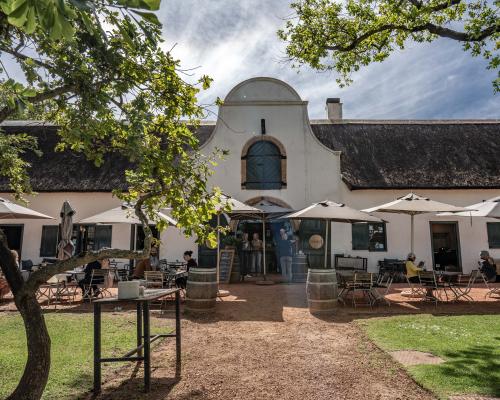
At Groot Constantia, the oldest wine farm in South Africa, the 450,000 visitors who pass through its gates annually can admire the picturesque vineyards sloping towards a bay ringed by mountains or enjoy a glass of sweet Grand Constance, reputed to have been Napoleon’s favourite wine.(在南非最古老的葡萄酒庄园格鲁特·康斯坦提亚,每年有45万游客穿过大门,欣赏如画的葡萄园向群山环绕的海湾倾斜,或品尝一杯甜美的康斯坦斯甜酒——据传这是拿破仑最爱的葡萄酒。)
在南非最古老的葡萄酒庄园格鲁特·康斯坦提亚,每年有45万游客穿过大门,欣赏如画的葡萄园向群山环绕的海湾倾斜,或品尝一杯甜美的康斯坦斯甜酒——据传这是拿破仑最爱的葡萄酒。
Unusually among the region’s old vineyards, there is also a museum that includes the history of slavery, run by state body Iziko Museums. Panels display information about enslaved people – about 30 of whom lived on the estate at any given time from its founding in 1685 until slavery was abolished in 1834 by the British colonial government – detailing everything from their work to what they ate.(展板展示了关于被奴役者的信息——从1685年建立到1834年英国殖民政府废除奴隶制期间,任何时刻大约有30名奴隶生活在庄园里——详细记录了从他们的工作到饮食的方方面面。)
在该地区的老葡萄园中,这里不同寻常地设有一座博物馆,其中包含奴隶制历史,由国有机构伊齐科博物馆运营。展板展示了关于被奴役者的信息——从1685年建立到1834年英国殖民政府废除奴隶制期间,任何时刻大约有30名奴隶生活在庄园里——详细记录了从他们的工作到饮食的方方面面。
Two plaques(牌匾) list the names of people forcibly taken from Mozambique, Madagascar, India, Sri Lanka and Indonesia. “Today we pay tribute(致敬) and acknowledge the enormous contribution of these men, women and children in the success of Groot Constantia and also acknowledge their oppression(压迫) and suffering under slavery and their resilience(韧性) and courage,” the plaques read.
两块牌匾列出了被强行从莫桑比克、马达加斯加、印度、斯里兰卡和印度尼西亚带走的人的名字。牌匾上写道:“今天我们向这些男人、女人和儿童致敬,承认他们对格鲁特·康斯坦提亚的成功做出的巨大贡献,也承认他们在奴隶制下遭受的压迫和苦难,以及他们的韧性和勇气。”