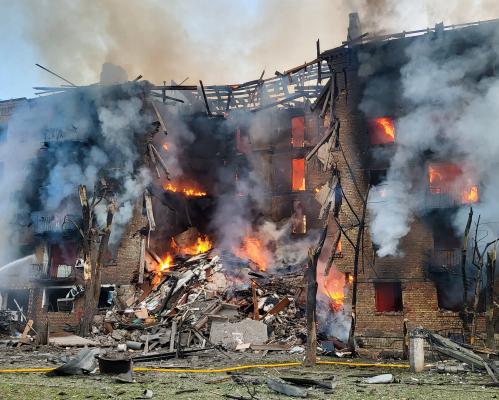
Explosions woke me at 3am the other night. Sitting on the bathroom floor behind two load-bearing(承重的) walls, scroll(刷(屏幕)、滚动浏览)ing through Telegram to see where Russian missiles were heading, I noticed the light was on. Power had returned while we slept. On pure autopilot, I stood up, stuffed laundry into the washing machine, set a quick cycle hoping it would finish spinning before the next blackout, and sat back down to wait out the attack.(我完全凭本能站起来,把衣服塞进洗衣机,设了个快洗程序,希望它能在下次停电前甩干,然后又坐回去等空袭结束。)
前几天凌晨三点,爆炸声把我吵醒。我坐在卫生间地板上,背靠两堵承重墙,刷着Telegram看俄罗斯导弹飞向哪里,忽然注意到灯亮着。我们睡觉时来电了。我完全凭本能站起来,把要洗的衣服塞进洗衣机,设了个快洗程序,希望它能在下一次停电前甩干,然后又坐回去等空袭结束。
In our fifth year of full-scale war, air raid apps have introduced a new bureaucratic(官僚式的、繁文缛节的) absurdity: threats are colour-coded(用颜色分类的) into yellow for drones and red for missiles, as if a “yellow” drone alert were merely a light autumn drizzle(毛毛雨、细雨). This one was red. But honestly, ballistic(弹道的) missiles are almost convenient. Unlike the Russian drones that buzz monotonously for an hour and under which we now simply roll over and keep sleeping, hoping for the best, ballistic missiles take just minutes to arrive.(俄罗斯无人机单调地嗡嗡响上一个小时,我们现在干脆翻个身继续睡,听天由命;弹道导弹却只需几分钟就到。) A five-minute break on the bathroom floor barely interrupts your sleep, or your laundry.
全面战争进入第五年,空袭警报应用带来了一种新的官僚式荒诞:威胁被按颜色分级,黄色代表无人机,红色代表导弹,仿佛“黄色”无人机警报不过是秋天的一场毛毛雨。这次是红色。但说实话,弹道导弹几乎算得上方便。俄罗斯无人机单调地嗡嗡响上一个小时,我们现在干脆翻个身继续睡,听天由命;弹道导弹却只需几分钟就到。在卫生间地板上待五分钟,几乎不会打断你的睡眠,也不会打断你的洗衣。
On Sunday night, when hackers attacked the Ukrainian emergency alert app to warn of an imminent(即将发生的、迫在眉睫的) nuclear strike, we didn’t even notice – everyone uses their favourite Telegram channels anyway. After five years of cross-checking missile trajectories in real time, you are simply too exhausted to waste calories on a fake apocalypse, and too prepared for the real one.(五年来实时交叉核对导弹轨迹之后,你实在累得没力气为一场虚假的末日浪费卡路里,而且对真正的末日也准备得太充分了。)
周日晚上,黑客攻击了乌克兰紧急警报应用,发出即将发生核打击的警告,我们甚至没注意到——反正大家都用自己常看的Telegram频道。五年来实时交叉核对导弹轨迹之后,你实在累得没力气为一场虚假的末日浪费卡路里,而且对真正的末日也准备得太充分了。