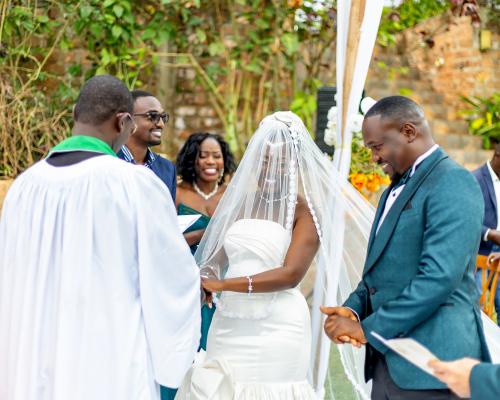
We had been together 20 years, had two children and had a customary marriage(习俗婚姻) with our village sub-county two years ago without any real plans for a church wedding. So we called our second ceremony a celebration of love and not a wedding. How else would a self-professed African feminist survive being the centre of a colonial and Abrahamic religious ceremony that also manages to reinforce the most male-centred aspects of African culture?(一个自称非洲女权主义者的人,否则怎能忍受成为一场殖民主义兼亚伯拉罕系宗教仪式的中心?这场仪式还强化了非洲文化中最以男性为中心的方面。)
我们在一起20年,有两个孩子,两年前还在我们村的乡里按习俗结了婚,当时并没有真正打算办教堂婚礼。所以我们把第二次仪式称为“爱情的庆典”,而不是婚礼。否则,一个自称非洲女权主义者的人,怎么能忍受成为一场殖民主义兼亚伯拉罕系宗教仪式的中心?这场仪式还偏偏强化了非洲文化中最以男性为中心的那些方面。
Our invitations came directly from me and my partner Mark, not – as is traditional – from our families, and in the form of a playful gif featuring the song Love Potion from the South African group Mafikizolo, a reminder that this was a wedding on our terms.(我们的请柬直接由我和伴侣马克发出,而非传统上由双方家庭发出,形式是一张俏皮的动图,配着南非组合Mafikizolo的歌曲《Love Potion》,提醒大家这是按我们自己的意愿办的婚礼。) I thought they screamed(大声宣告) “liberated African feminist”. But when my cousin Moses received his, he asked, “So, the patriarchy(父权制) has won?”
我们的请柬直接由我和伴侣马克发出,而不是像传统那样由双方家庭发出,形式是一张俏皮的动图,配着南非组合Mafikizolo的歌曲《Love Potion》,提醒大家这是按我们自己的意愿办的婚礼。我以为这请柬大声宣告着“解放的非洲女权主义者”。但我表弟摩西收到后问:“所以,父权制赢了?”
He added the power and glasses of wine emojis to his WhatsApp message. I felt his judgment and victory reverberate(回荡) from his London flat to my Kampala home. So I looked for reassurance(安慰) from my professional network, a group of people I met 10 years ago when we worked at Oxfam, arguably(可以说) the most feminist NGO of our time. Surely they would understand that me undertaking a white wedding was simply a celebration of love and not the greatest feminist sellout of all time.(他们肯定会理解,我举办白色婚礼只是庆祝爱情,而不是史上最大的女权主义背叛。)
他在WhatsApp消息里加上了“力量”和“碰杯”的表情符号。我感觉到他的评判和胜利感从伦敦的公寓回荡到我在坎帕拉的家。于是我从职业人脉圈里寻求安慰——那是我10年前在乐施会工作时认识的一群人,乐施会可以说是我们这个时代最女权主义的非政府组织。他们肯定会理解,我举办白色婚礼只是庆祝爱情,而不是史上最大的女权主义背叛。