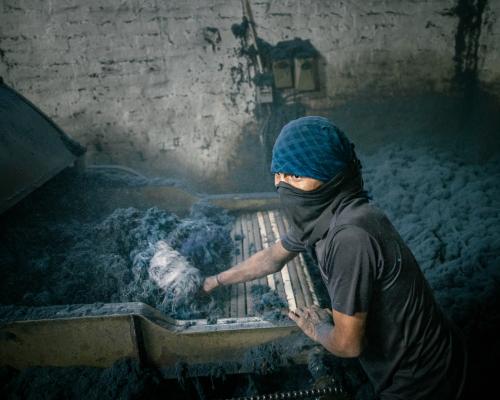
For three months, Suraj Kumar’s job was to feed discarded(被丢弃的) clothes into shredding(粉碎) machines in Panipat, an industrial city in the north Indian state of Haryana. Clothes discarded in the US, Canada and Europe arrive in the city to be torn back into fibres and spun into yarn, feeding a textile recycling industry that supplies markets across the world.(来自美国、加拿大和欧洲的废弃衣物运抵该市,被撕碎还原成纤维并纺成纱线,供给一个面向全球市场的纺织回收产业。)
在印度北部哈里亚纳邦的工业城市帕尼帕特,苏拉杰·库马尔的工作是把废弃衣物送入粉碎机,干了三个月。来自美国、加拿大和欧洲的废弃衣物运抵这座城市,被撕碎还原成纤维,再纺成纱线,供给一个面向全球市场的纺织回收产业。
Suraj, 19, had travelled from West Bengal state to work in Panipat’s factories, following his cousins and friends who had already found jobs there.(19岁的苏拉杰从西孟加拉邦来到帕尼帕特的工厂打工,追随已经在那里找到工作的表兄弟和朋友们。) He hoped to earn enough to send money home to his parents. But in late August, an electrical short circuit(电气短路) in the machine propelled(猛推) him into the shredding mechanism(机械装置). The accident crushed both arms.
19岁的苏拉杰从西孟加拉邦来到帕尼帕特的工厂打工,追随已经在那里找到工作的表兄弟和朋友们。他希望能挣够钱寄给父母。但今年8月下旬,机器发生电气短路,把他甩进了粉碎装置。事故压碎了他的双臂。
“I wish I had died rather than(而不是) lost both my arms,” Suraj says. An only child, he had hoped his job in Panipat would support his parents. Instead, he fears he has become a financial burden(负担) on them. The work he had taken up to help his family has left him dependent on others, with no certainty about what his future will look like.(他当初为帮衬家庭而接受的工作,却让他依赖他人,未来一片茫然。)
“我宁愿死了,也不想失去双臂,”苏拉杰说。作为独生子,他曾希望帕尼帕特的工作能养活父母。如今,他担心自己成了他们的经济负担。他当初为帮衬家庭而接受的工作,却让他依赖他人,未来一片茫然。