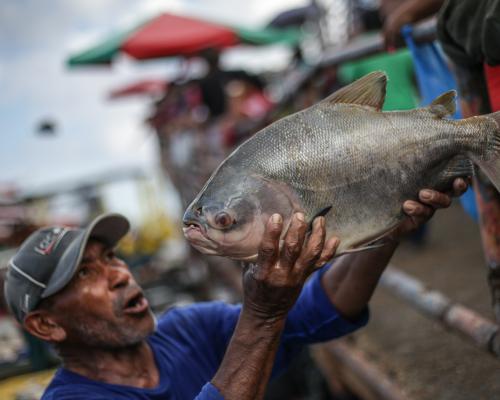
As a boy in rural São Paulo, Adalberto Luis Val used to stare(凝视,盯着看) into the lake where his father took him fishing and wonder how all those creatures swimming below stayed alive. One day, he netted(用网捕,网住) a few, put them in a jar, and brought them home to observe. The next morning, they were all dead. Val was devastated(极度悲伤的,难过的) but intrigued(被激起好奇心的).
小时候,阿达尔贝托·路易斯·瓦尔住在圣保罗的乡下。父亲常带他去钓鱼,他总盯着湖面,好奇水下那些生物是怎么活下来的。有一天,他捞了几条鱼放进罐子,带回家观察。第二天早上,鱼全死了。瓦尔既难过又好奇。
“I needed to know how fish are able to live,” he says.(“我必须弄清楚鱼是怎么活下来的,”他说。)
“我必须弄清楚鱼是怎么活下来的,”他说。
Fast forward(快进(到),快进键) to present-day Manaus, a city in Brazil’s Amazon rainforest and Val’s adoptive(收养的,领养的) home since the early 1980s, which he has helped convert over the past five decades into a frontier(前沿,边界) for tropical climate science.
快进到今天的马瑙斯——这座位于巴西亚马逊雨林的城市,自20世纪80年代初起就是瓦尔收养他的家。过去五十年间,他帮助这里转变为热带气候科学的前沿阵地。