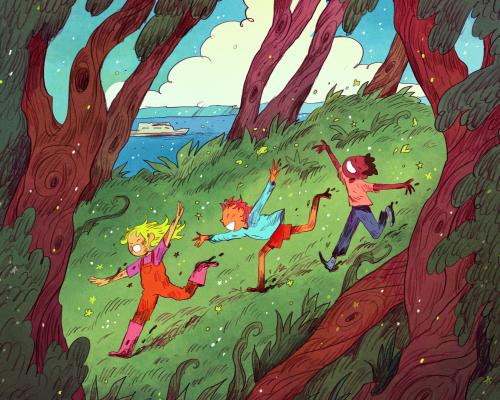
On the Maine island where I live, childhood ends when you’re old enough to catch the 7.15am ferry(渡轮) to school.
在我居住的缅因州小岛上,童年结束于你长到能赶上早上7点15分去学校的渡轮的那一刻。
We live year-round(全年地) on Peaks Island, a small island accessible(可到达的) only by boat about 3 miles off the coast of Portland. There is an elementary school here, but no middle or high school. So, once island children reach sixth grade, they begin commuting to the mainland by ferry. In many ways, it is a rite of passage(人生仪式).
我们常年住在皮克斯岛,这是波特兰海岸外约3英里处的一座小岛,只能乘船抵达。岛上有一所小学,但没有初中和高中。因此,岛上的孩子一到六年级,就开始乘渡轮去大陆上学。从很多方面来说,这是一种人生仪式。
When my son Theo started middle school, I was thrilled(非常高兴的) for him – and a little heartbroken(心碎的). Suddenly, he was across the bay all day, reachable(可联系到的) only by boat or cellphone (which he didn’t have). Theo has always belonged to our island as much as(和……一样多) he has belonged to me. After years of rinsing sand from his socks and pulling twig(细枝)s from his hair, sending him away each morning felt a little like prying him loose(把他撬开) from his natural habitat(栖息地).
我儿子西奥上初中时,我为他高兴,又有点心碎。突然间,他整天都在海湾对岸,只能靠船或手机联系(而他还没有手机)。西奥一直既属于我,也属于我们这座岛。多年来,我为他冲洗袜子里的沙子、摘掉头发里的树枝,如今每天早上送他离开,感觉有点像把他从自然栖息地里撬走。