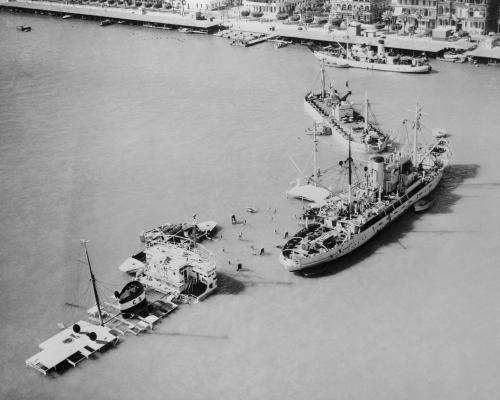
On 26 July 1956, Egyptian president Gamal Abdel Nasser announced the nationalisation of the Suez Canal Company, the joint British-French enterprise which had owned and operated the canal since its construction in 1869.(1956年7月26日,埃及总统纳赛尔宣布将苏伊士运河公司收归国有,这家英法合资企业自1869年运河建成以来一直拥有并运营该运河。) Both countries saw this as a threat to their interests and responded with a coordinated(协同的) attack (with Israel) to take back the canal zone.
1956年7月26日,埃及总统贾迈勒·阿卜杜勒·纳赛尔宣布将苏伊士运河公司收归国有。这家英法合资企业自1869年运河建成以来一直拥有并运营着该运河。英法两国将此视为对自身利益的威胁,于是联合以色列发动协同攻击,试图夺回运河区。
Israeli forces swept(席卷;迅速推进) into the Sinai desert on 29 October and two days later there was an Anglo-French bombing campaign(轰炸行动) against Egyptian military targets. But on 6 November, under intense pressure from the international community and particularly the US, Britain and France accepted a UN-mandated ceasefire.(但11月6日,在国际社会尤其是美国的巨大压力下,英法接受了联合国授权的停火协议。)
10月29日,以色列军队席卷西奈沙漠;两天后,英法对埃及军事目标发动轰炸行动。但11月6日,在国际社会尤其是美国的巨大压力下,英法接受了联合国授权的停火协议。
The Manchester Guardian was against the use of force from the beginning of the crisis. Under newly appointed editor Alastair Hetherington, the paper condemned an ultimatum given to the Egyptians to withdraw from the canal as “an act of folly without justification,” and on 5 November described the actions as “hideously miscalculated and utterly immoral”.(在新任主编赫瑟林顿的领导下,该报谴责向埃及发出的要求其撤出运河的最后通牒是“毫无正当理由的愚蠢之举”,并在11月5日将有关行动描述为“极其错误的算计和完全不道德的”。)
《曼彻斯特卫报》从危机一开始就反对使用武力。在新任主编阿拉斯泰尔·赫瑟林顿的领导下,该报谴责向埃及发出的要求其撤出运河的最后通牒是“毫无正当理由的愚蠢之举”,并在11月5日将有关行动描述为“极其错误的算计和完全不道德的”。
Editorial: A disaster
社论:一场灾难
Fighting ends in Egypt: Allies halt 30 miles south of Port Said
埃及战事结束:盟军停在塞得港以南30英里处
Premier’s position hazarded: head-shaking among the Tories
首相地位堪忧:保守党内摇头叹息