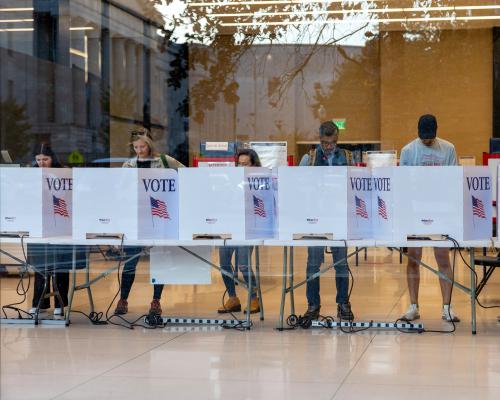
Just as voting was due to end in Brazil’s presidential runoff(决选) on 25 October, a supreme court justice ordered polling stations to stay open for another two hours, to give voters stranded(滞留的) by flash floods and bus shortages more time to cast their ballots(投票). It added more drama to an already tense election. The final polls the night before showed Flávio Bolsonaro only marginally ahead, by about 51% to 49% – within the margin of error(在误差范围内). A statistical tie(统计上平局).
10月25日,巴西总统决选投票即将结束之际,一名最高法院法官下令投票站再开放两小时,以便因突发洪水和公交车短缺而滞留的选民有更多时间投票。这给本已紧张的选举增添了更多戏剧性。前夜的最后民调显示,弗拉维奥·博索纳罗仅以约51%对49%微弱领先——在误差范围内。统计上势均力敌。
Prediction markets told a different story. Polymarket priced a Bolsonaro victory at about 80% on election day, where it had hovered(徘徊) for three weeks. On the eve of the vote it touched 84%. Even as polls closed, the market gave the incumbent(现任者), Luiz Inácio Lula da Silva, roughly a one-in-five chance(五分之一的可能性). A few hours later, Lula had won, by 51.8% to 48.2%.
预测市场却给出了不同的说法。选举日当天,Polymarket给博索纳罗获胜定价约80%,这一概率已徘徊了三周。投票前夜一度触及84%。即便投票站关闭时,市场仍给现任总统卢拉·伊纳西奥·卢拉·达席尔瓦大约五分之一的胜算。几小时后,卢拉以51.8%对48.2%获胜。
Prediction markets claim to be highly accurate because they aggregate(汇聚) the independent judgments of many traders – the “wisdom of crowds(群体智慧)” – and make each one put money behind their beliefs(用金钱为信念背书). Prices are more accurate than polls and faster than newsrooms, proponents(支持者) argue. So what went wrong?
预测市场声称高度准确,因为它们汇聚了许多交易者的独立判断——“群体智慧”——并让每个人为自己的信念投入真金白银。支持者认为,价格比民调更准确,比新闻编辑室更迅速。那么,哪里出了问题?