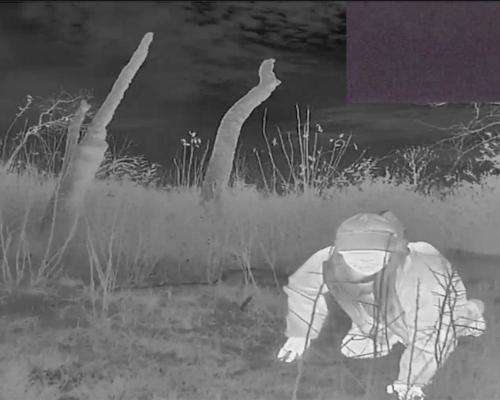
Artem Lytvyn was crossing a field when the bang happened. Up ahead was a tree line. Not far beyond that the Russian border. The 25-year-old Ukrainian soldier had spent five days trekking to a dangerous forward position in the north-eastern Kharkiv region.(这名25岁的乌克兰士兵花了五天时间,跋涉到哈尔科夫地区东北部一个危险的前沿阵地。) Along the way he and six comrades(战友) dodged drones, and killed two Russians in a foxhole(散兵坑).
爆炸声响起时,阿尔乔姆·利特文正穿过一片田野。前方是一排树林,再往前不远就是俄罗斯边境。这名25岁的乌克兰士兵花了五天时间,跋涉到哈尔科夫地区东北部一个危险的前沿阵地。一路上,他和六名战友躲避无人机,还在一个散兵坑里打死了两名俄军。
A few hundred metres short of(距离……还差) his destination, he trod(踩) on a mine. “I didn’t hear anything. It was a magnet type. My rifle set it off(引爆了它),” Lytvyn said. He applied two tourniquets(止血带) to his shattered(粉碎的) right leg and pulled off his combat boot. Fellow soldiers dragged him and another wounded platoon(排) member, Siava, into bushes. The same blast ripped off(炸断) Siava’s leg. He died two days later.
离目的地还有几百米时,他踩中了一枚地雷。“我什么都没听见。那是磁性的。我的步枪引爆了它,”利特文说。他给被炸烂的右腿绑了两条止血带,脱下了作战靴。战友把他和另一名受伤的排里成员西亚瓦拖进灌木丛。同一场爆炸炸断了西亚瓦的腿。两天后他死了。
Evacuating casualties(伤亡人员) from the frontline of Russia’s war in Ukraine is notoriously(出了名地) difficult. In the five years since Vladimir Putin’s full-scale invasion, it has become a heavily surveilled and ever-widening “kill zone” where constant drone attacks mean even armoured vehicles can no longer be used.(自普京全面入侵以来的五年里,前线已变成一个受到严密监视、不断扩大的“杀伤区”,无人机袭击持续不断,连装甲车都无法使用。) Soldiers are often forced to spend months in dugouts(掩体) without rotation(轮换).
从俄乌战争前线撤离伤员是出了名的困难。自弗拉基米尔·普京发动全面入侵以来的五年里,前线已变成一个受到严密监视、不断扩大的“杀伤区”,无人机袭击持续不断,连装甲车都无法使用。士兵们常常被迫在掩体里待上数月,无法轮换。