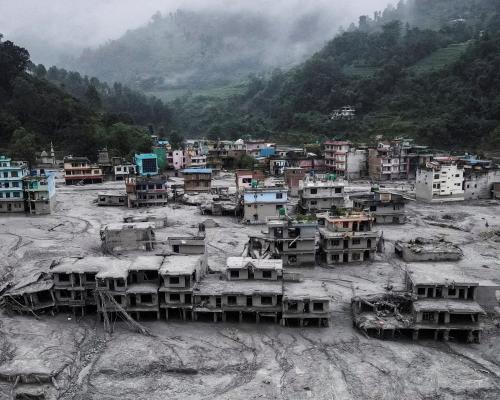
Every day, Nikhila Agastya answers more questions from her two children: has she heard anything about their father? Is he with anyone? Is it snowing in Kathmandu? Is he cold, and does he have warm clothing? Will he come home?(每天,尼基拉·阿加斯蒂亚都要回答两个孩子没完没了的问题:有爸爸的消息吗?他和别人在一起吗?加德满都下雪了吗?他冷吗?有厚衣服穿吗?他会回家吗?) The answer is: probably not.
每天,尼基拉·阿加斯蒂亚都要回答两个孩子没完没了的问题:有爸爸的消息吗?他和别人在一起吗?加德满都下雪了吗?他冷吗?有厚衣服穿吗?他会回家吗?答案很可能是:不会。
“They know that [their] father is missing(失踪的),” Nikhila says. “And they are still looking for him. They always wait; every day they wait for him. They won’t give up(放弃), they think he will come home.”
“他们知道爸爸失踪了,”尼基拉说,“可他们还在找他。他们一直在等,每天都等他。他们不肯放弃,觉得他会回家。”
Her husband, Gopi Agastya, had travelled from Sydney to Nepal to go on a pilgrimage(朝圣) with the Isha Foundation(伊莎基金会,印度灵性组织) when a flood hit on 26 August. He did not return home.
她的丈夫戈皮·阿加斯蒂亚从悉尼前往尼泊尔,与伊莎基金会一起朝圣,8月26日洪水来袭。他再也没有回家。
‘I just hope’
“我只希望”